
Restoration in China
 China
China

What you'll get

Public landing page
Our public forest profile showcases GPS coordinates, CO2 impact, and work hours created by your forest, including both trees planted and trees protected.

Certificate of planted or protected tree
An official document that serves as proof of your contribution to reforestation and restoration. It includes tree details and conservation info.
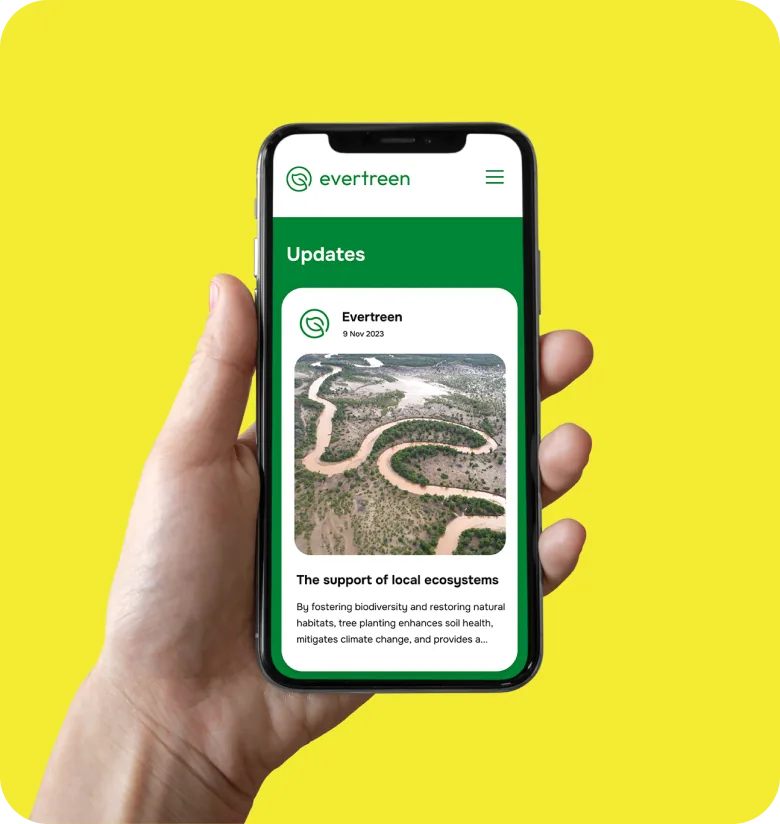
Project updates
Stay updated about the impact through dynamic videos showcasing the success of the trees you’ve helped plant and protect.
How to gift your trees

Choose your trees and schedule their planting or protection instantly

Log in to your account and navigate to the 'My Trees' section

Use your credit to generate your gift certificates

Send your gifts to family and friends!

About this project



Across China’s vast and varied landscapes, ambitious reforestation and restoration efforts are helping to reverse decades of ecological degradation while securing measurable climate benefits for generations to come. From the highland grasslands of Qinghai to the karst hills of Guizhou, from the desert margins of Gansu to the forests of Inner Mongolia, Anhui, and Hubei, a suite of AFOLU carbon offsetting projects are transforming degraded lands into thriving ecosystems. These initiatives combine climate action with community development, biodiversity conservation, and watershed protection, creating a national mosaic of sustainability.
In the northwest’s Hexi Corridor of Gansu Province, the Zhangye Improved Grassland Management Project is bringing life back to 261,000 hectares of grasslands once scarred by overgrazing and desertification. Through reseeding with native forage, rotational grazing, fencing, and pest management, the project is restoring vegetation cover, protecting soils, and is expected to sequester more than 29 million tonnes of CO₂ equivalent over four decades.
Further west, in Qinghai’s Guoluo Tibetan Autonomous Prefecture, where the Yangtze, Yellow, and Lancang Rivers rise, the Guoluo Grassland Sustainable Management Project is combating the “black soil beach” phenomenon caused by erosion and overgrazing. By reseeding 160,000 hectares with resilient native grasses and introducing sustainable grazing systems, the project not only increases carbon storage but also strengthens water regulation in one of Asia’s most critical headwaters, helping buffer the effects of glacier retreat and climate change.
In southern China’s Guizhou Province, the Miaoling Afforestation Project is converting barren karst hills into rich, green forests. On over 30,000 hectares, native species such as China fir, Masson pine, and Pinus yunnanensis are being planted to lock away 13.7 million tonnes of CO₂ over 30 years. Beyond its environmental benefits, the project has generated more than 18,000 jobs for local villagers, 60 percent of which were filled by women, offering a powerful example of ecological restoration driving social progress.
In the Yangtze and Jianghuai hilly region of Anhui Province, the Hechu Afforestation Project is planting 30,000 hectares of native broadleaf forests on previously barren hills. This work not only enhances biodiversity and strengthens soil and water conservation in the lower Yangtze basin, but also contributes nearly 9.4 million tonnes of CO₂ reductions over 20 years, while providing new income opportunities to rural communities.
Meanwhile, in central China’s Hubei Province, the Hongshan IFM Project covers more than 300,000 hectares of forest, converting logged forests into protected areas. This improved forest management ensures long-term carbon storage, supports biodiversity, and protects one of central China’s key forest ecosystems.
In the northern frontier of Inner Mongolia, the Keyihe IFM Project secures 20,526 hectares of birch and larch forest once slated for logging. By placing these ecosystems under permanent protection, the project reduces greenhouse gas emissions, prevents soil erosion, and safeguards habitats for native wildlife.
Finally, across several state-owned forests managed in Hunan Province, including Jinzhu, Zhaoxie, Zengtian, Niutian, Shipi, and Gongxi, the IFM Project protects an additional 7,747 hectares of forest, ensuring 2.9 million tonnes of CO₂ removals over three decades. By converting logged areas into non-commercial forests, it strengthens local ecological stability while contributing to global climate targets.
Together, these seven projects form an interconnected story of renewal. They reflect China’s urgent need to address land degradation, desertification, biodiversity loss, and watershed vulnerability — challenges with profound implications for climate resilience. Certified under internationally recognized AFOLU carbon standards, they deliver verified, measurable climate benefits while generating tangible co-benefits for ecosystems and people alike.
Crucially, these efforts are not isolated experiments. They are AFOLU (Agriculture, Forestry, and Other Land Use) carbon offsetting projects, certified under rigorous international standards such as the American Carbon Registry (ACR) and Verra (VCS). Independent verification ensures that every credit issued reflects measurable, additional, and permanent climate benefits.
Evertreen participates only as an intermediary, helping organizations and individuals around the world channel funding into these certified projects. By doing so, Evertreen enables businesses and citizens alike to contribute to meaningful, verifiable climate action while supporting the protection of most treasured forest landscapes.