

Reforestation in Switzerland
Discover Evertreen’s Swiss Woodland Reforestation Project, aimed at restoring Switzerland's forests, enhancing biodiversity, and promoting sustainable practices.
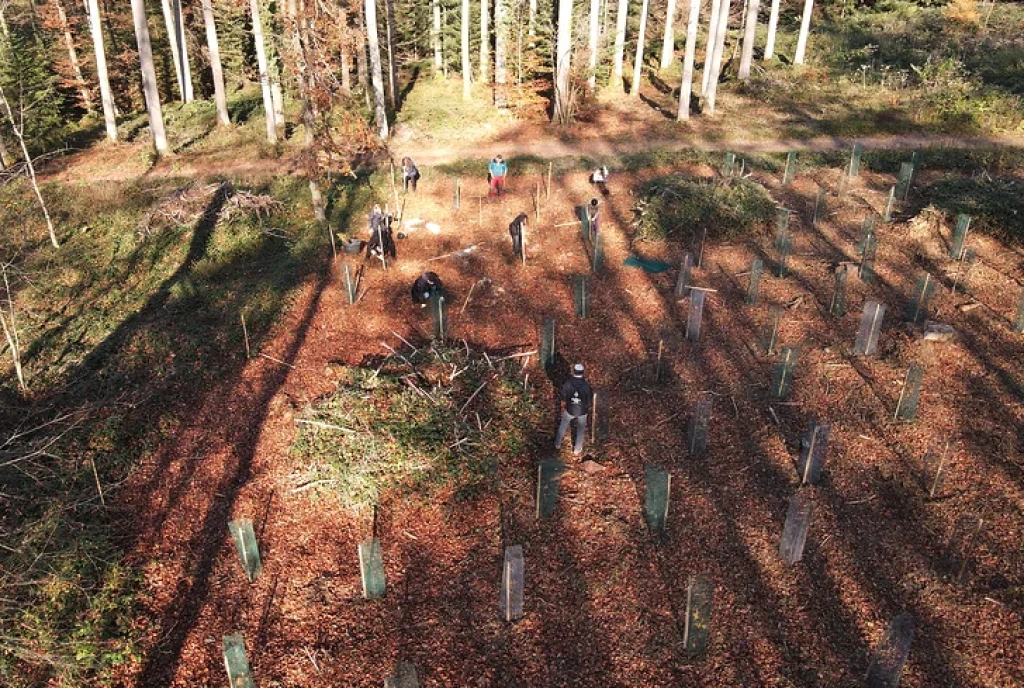
Switzerland, a land of stunning natural beauty, is home to diverse forests that play a crucial role in the country’s environment and culture. Covering about one-third of the nation’s land area, Swiss forests are an integral part of its landscapes, from the majestic Alps to the lush lowlands. However, these forests are under increasing pressure from climate change, urbanization, and other environmental challenges.
This page highlights the types of trees planted in Switzerland as part of our reforestation projects, their environmental benefits, and their importance in preserving the country’s ecological balance.
Why Plant Trees in Switzerland?
Switzerland’s forests are vital for:
- Carbon Sequestration: Trees in Switzerland act as natural carbon sinks, helping to offset greenhouse gas emissions.
- Ecosystem Protection: Forests provide habitats for countless species of plants and animals, supporting biodiversity.
- Soil and Water Conservation: Forests stabilize soil, prevent erosion, and protect water sources in mountainous areas.
- Climate Resilience: Reforestation helps create natural buffers against climate-induced disasters like avalanches and floods.
Our projects focus on planting native and climate-resilient tree species to ensure the long-term health and sustainability of Swiss forests. Here are some of the species we plant:
European Beech (Fagus sylvatica)
A broadleaf tree known for its smooth grey bark and dense canopy, providing shade and shelter.
Supports biodiversity by creating habitats for insects and birds. Its dense roots prevent soil erosion.
Norway Spruce (Picea abies)
An iconic conifer tree with a pyramidal shape and needle-like leaves, commonly found in alpine regions.
Essential for carbon capture, and its roots help protect soil stability in steep areas.
Silver Fir (Abies alba)
A towering conifer with soft needles and a distinctive symmetrical structure, native to Swiss forests.
Plays a key role in regulating water cycles and creating habitats for local wildlife.
Scots Pine (Pinus sylvestris)
A hardy conifer with a reddish-brown bark and long, slender needles, adapted to a variety of climates.
Thrives in poor soil conditions and contributes to soil restoration and air purification.
Tree Planting Process
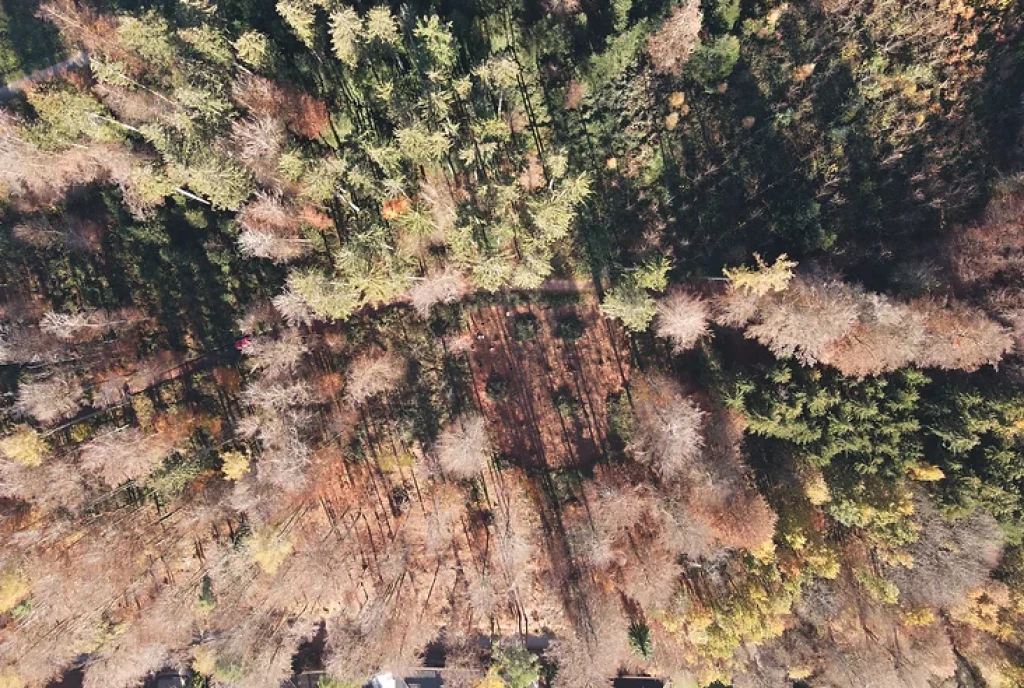
We collaborate with local forestry experts, environmental organizations, and communities to plant trees that align with Switzerland’s ecological and climatic conditions. Here’s how we do it:
- Site Selection: Identifying areas that require reforestation, such as degraded lands or regions affected by deforestation.
- Species Matching: Choosing tree species that are native, resilient, and beneficial for the specific ecosystem.
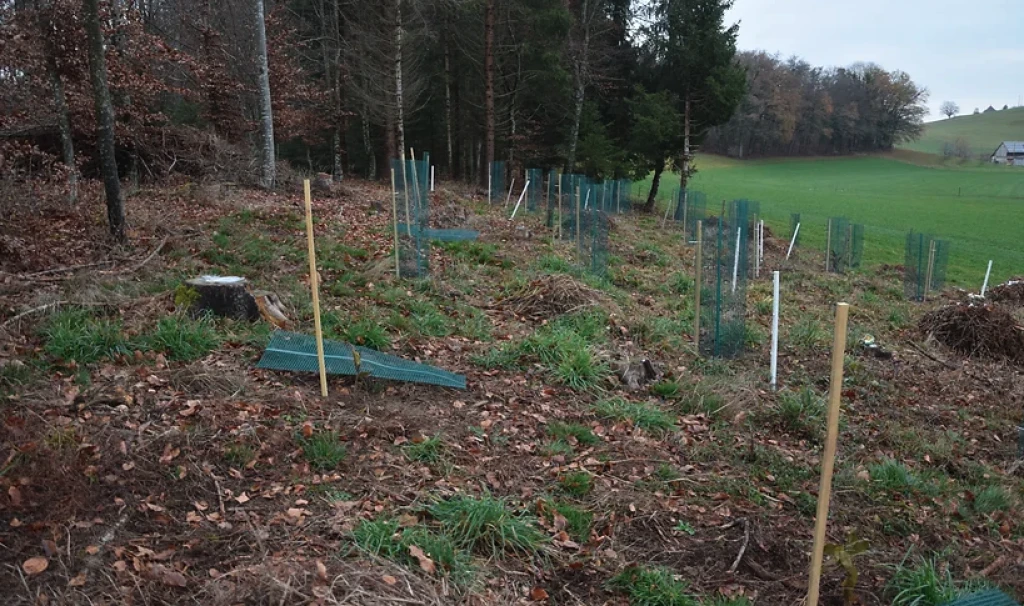
- Sustainable Practices: Using planting techniques that promote long-term growth and biodiversity.
- Monitoring: Regularly monitoring the trees to ensure survival rates and healthy forest development.
Benefits of Tree Planting in Switzerland
By planting trees in Switzerland, you contribute to:
- Combating Climate Change: Offset carbon emissions and mitigate global warming.
- Biodiversity Conservation: Protect and restore habitats for native species.
- Water and Air Quality Improvement: Forests filter water and air, benefiting local communities.
- Preservation of Scenic Landscapes: Maintain Switzerland’s iconic natural beauty for future generations.
Support this project
