
Rebuilding Los Angeles: How Tree Planting Can Mitigate Wildfire Damage

31 Jan 2025 in Green living

Rebuilding Los Angeles: How Tree Planting Can Mitigate Wildfire Damage

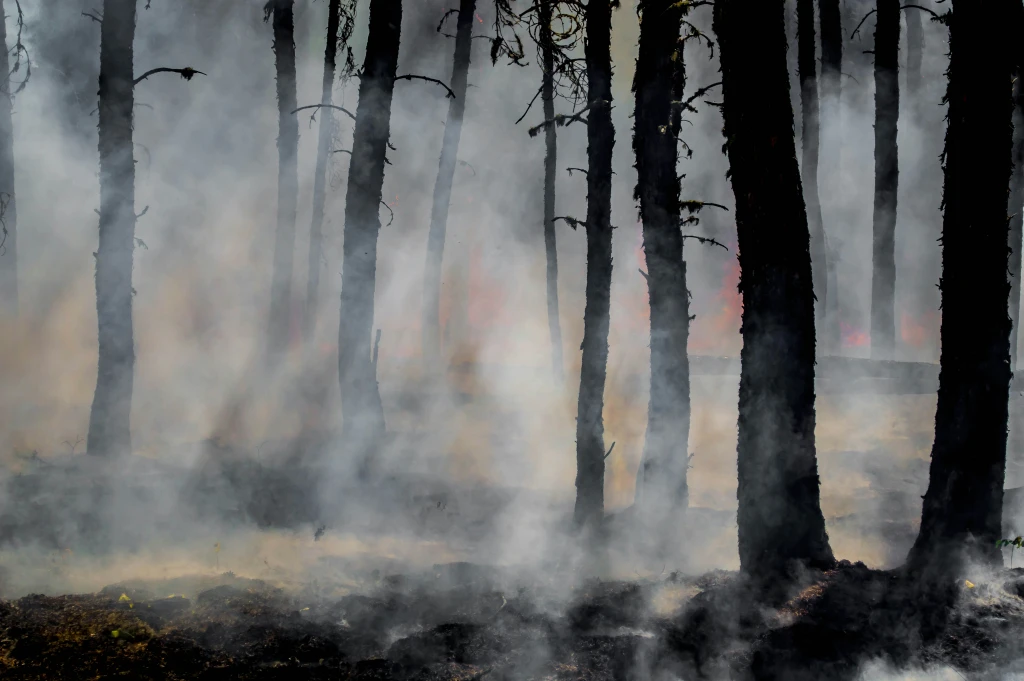
Los Angeles has long been a city shaped by its proximity to nature. From the majestic mountain ranges to the sprawling urban forests, its landscapes have inspired countless residents and visitors. Yet, in recent years, wildfires have taken an unprecedented toll on these natural spaces, threatening not only ecosystems but also the livelihoods of those who call Los Angeles home.

As the climate crisis accelerates, wildfires are becoming more frequent, intense, and destructive. Communities are left grappling with the aftermath—charred landscapes, displaced wildlife, poor air quality, and economic losses that take years to recover from. At Evertreen, we are firm believers that there is a way forward. By harnessing the power of tree planting and reforestation, we can not only heal the damage caused by wildfires but also prevent future devastation.

In this article, we’ll explore the transformative role of tree planting in rebuilding Los Angeles, the ecological and social benefits of reforestation, and how collective efforts can lead to a more resilient, greener city.

🌍 The numbers are shocking. Learn how deforestation is affecting our planet and why it’s crucial to act: How Many Trees Do We Cut Down Every Year?


Understanding the Impact of Wildfires on Los Angeles


Wildfires are a natural part of California’s ecosystem, but human activity and climate change have tipped the balance. Rising temperatures, prolonged droughts, and increased fuel loads (dry vegetation) have made wildfires more destructive. Over the past decade, California has experienced some of its largest fires in recorded history, including the devastating Woolsey Fire, which burned nearly 100,000 acres and destroyed over 1,600 structures.

In Los Angeles, the repercussions of wildfires are felt on multiple levels:

  • Environmental Damage: Wildfires decimate forests, destroy habitats, and leave soil exposed to erosion. Recovery can take decades without intervention.
  • Economic Losses: The cost of wildfire recovery—including firefighting efforts, rebuilding infrastructure, and healthcare costs—amounts to billions annually.
  • Health Risks: Smoke and airborne particulates from wildfires severely impact air quality, leading to respiratory issues and long-term health concerns.
  • Community Displacement: Wildfires force families to evacuate, disrupt lives, and leave many without homes or resources.

While these challenges may seem insurmountable, reforestation offers a pathway to recovery and resilience.


The Critical Role of Tree Planting in Recovery


1. Restoring Ecosystems


Trees are the backbone of healthy ecosystems. When wildfires sweep through forests, they destroy vital habitats for wildlife and disrupt natural processes like water filtration and soil stabilization. Tree planting helps rebuild these ecosystems by reintroducing native tree species that support biodiversity, stabilize the soil, and restore the natural balance.

2. Reducing Future Wildfire Risks


Strategic tree planting can reduce the intensity and spread of future wildfires. Certain tree species are more fire-resistant and can act as natural barriers, slowing down flames and protecting vulnerable areas. Additionally, well-maintained forests with healthy tree density are less likely to accumulate dry vegetation, which serves as fuel for wildfires.

3. Carbon Sequestration


Wildfires release massive amounts of carbon dioxide into the atmosphere, exacerbating climate change. Trees act as natural carbon sinks, absorbing CO2 and mitigating its impact. Reforestation in wildfire-affected areas is a direct way to combat the climate crisis while addressing local environmental issues.

4. Improving Water and Soil Health


After a wildfire, exposed soil is prone to erosion and runoff, which can contaminate water sources and reduce the land’s fertility. Tree roots anchor the soil, preventing erosion, while the canopy slows rainfall, allowing water to infiltrate the ground. This process improves water retention and restores the land’s ability to support vegetation.

🌱 Discover why tree planting is one of the most effective solutions for climate change. Learn more in our guide: Why Planting Trees is Crucial for Climate Change

Reforestation: A Vision for Los Angeles’ Future


1. Urban Tree Planting for a Safer City


In urban areas of Los Angeles, tree planting offers dual benefits: it enhances the city’s resilience to climate impacts and improves quality of life for residents. Trees provide shade, reducing the urban heat island effect, and improve air quality by filtering pollutants. Reforesting public parks, streets, and vacant lots can transform neighborhoods while building climate resilience.

2. Wildland Restoration at the Urban Interface


Los Angeles sits at the intersection of urban development and natural landscapes, known as the wildland-urban interface (WUI). This zone is highly vulnerable to wildfires due to the proximity of homes and infrastructure to flammable vegetation. Planting fire-resistant tree species in these areas creates natural firebreaks, protecting communities and reducing the risk of future disasters.

3. Supporting Wildlife Recovery


Wildfires displace countless animals, destroying their habitats and food sources. Reforestation efforts prioritize the planting of native species that sustain local wildlife populations, ensuring the long-term recovery of ecosystems.

4. Engaging Communities in Environmental Stewardship


Tree planting is a unifying activity that brings communities together around a shared goal. At Evertreen, we emphasize the importance of involving local residents, schools, and organizations in reforestation projects. By fostering a culture of environmental stewardship, we empower communities to take an active role in protecting their natural surroundings.

🌱 Want to understand how reforestation helps restore ecosystems? Dive into the details in our comprehensive guide: What is Reforestation?


The Long-Term Benefits of Tree Planting


Investing in tree planting today will pay dividends for generations to come. Here’s how:

  • Climate Resilience: Trees help regulate temperatures, reduce the urban heat island effect, and create landscapes that are better equipped to withstand climate challenges.
  • Public Health: Cleaner air, reduced heat, and access to green spaces contribute to improved mental and physical health for residents.
  • Economic Savings: Preventing wildfires and reducing their intensity through reforestation can save billions in firefighting and recovery costs.
  • Enhanced Biodiversity: Thriving ecosystems support a wide range of species, contributing to the ecological health of the region.

Evertreen’s Commitment to Los Angeles


At Evertreen, we are dedicated to creating a greener, more sustainable world. Through our platform, we make it possible for individuals and businesses to contribute to tree planting projects in wildfire-affected areas remotely. Each tree planted represents a step toward restoring the beauty and resilience of Los Angeles.

Our mission is grounded in action, collaboration, and innovation. We work with local communities, forestry experts, and environmental organizations to ensure our efforts are impactful and sustainable. By planting trees where they’re needed most, we’re not just rebuilding landscapes—we’re rebuilding hope.


How You Can Get Involved


Rebuilding Los Angeles after wildfire damage requires collective effort. Here are a few ways you can make a difference:

  • Support Tree Planting Projects: Partner with organizations like Evertreen to fund and participate in reforestation efforts.
  • Educate Yourself and Others: Spread awareness about the importance of reforestation and sustainable land management.
  • Advocate for Change: Support policies that prioritize wildfire prevention, climate action, and ecosystem restoration.

Together, we can transform wildfire-scarred landscapes into thriving forests and ensure a safer, greener future for Los Angeles.

🌎 Ready to make a global impact? Join Evertreen in our reforestation efforts and help restore the planet: Plant for the Planet


Join Us in Creating a Greener Tomorrow


At Evertreen, we’re more than just tree planters—we’re changemakers. By choosing to plant trees, you’re contributing to a legacy of sustainability, resilience, and hope. Join us as we work to rebuild Los Angeles and create a world where communities and ecosystems can thrive together.

Let’s make an impact, one tree at a time.  Join Evertreen in planting trees today!


Related articles

7 Oct 2026

Business Carbon Footprint: The Data You Need by Scope

A business carbon footprint is the total greenhouse gas emissions caused by a company's activities, grouped into Scope 1, 2 and 3. To calculate it you need activity data for each scope (fuel, electricity, purchases, travel, freight and waste), a matching emission factor for each item, and a clear record of the gaps you estimated. This article is a data checklist, not a calculation walkthrough. For the full method, from setting boundaries to reporting, see our step-by-step guide to calculating your business carbon footprint. Here we focus on the part that usually takes longest: finding the numbers. What data do you need for a business carbon footprint? Every line in a footprint follows one formula: activity data × emission factor = emissions. Activity data is a measured quantity, such as kilowatt-hours of electricity, litres of diesel or kilometres flown. An emission factor converts it into carbon dioxide equivalent (CO2e), a unit that expresses all greenhouse gases in terms of the warming effect of CO2. Public factor sets such as the UK Government's greenhouse gas conversion factors and the US EPA's Emission Factors Hub are widely used; note which edition you applied. The GHG Protocol Corporate Standard defines the three scopes. Scope 1 is direct emissions from sources you own or control. Scope 2 is purchased electricity, heat, steam and cooling. Scope 3 is all other indirect emissions in your value chain, upstream and downstream. Before collecting anything, set your organisational boundary (many smaller companies use operational control, covering the sites and vehicles they run) and a reporting year, ideally your financial year. Scope 1 and Scope 2: the data checklist This data usually sits with finance, facilities and fleet teams. Collect it by site and by month, so missing periods stand out. Gas and heating fuels (Scope 1): supplier invoices or meter readings. Replace estimated readings with actual ones. Company vehicles (Scope 1): fuel-card reports in litres; mileage logs with vehicle type as a fallback. Electricity for charging company cars at your sites goes in Scope 2. Refrigerants (Scope 1): kilograms topped up in air conditioning, heat pumps and cold stores, from service engineers' records. Small leaks matter because some refrigerants have a very high warming effect. Generators and process emissions (Scope 1): fuel purchase records and any process that releases gases directly. Electricity, heat, steam and cooling (Scope 2): kWh per meter from bills or your supplier's portal, for every site. The GHG Protocol's Scope 2 Guidance asks for electricity to be reported two ways. The location-based method uses the average factor of the local grid. The market-based method reflects your contracts, so you also need your supplier's fuel-mix disclosure and any certificates you hold, such as renewable energy certificates (RECs) in the US or Guarantees of Origin in Europe. These are energy certificates, not carbon offsets. Where does Scope 3 data come from? The GHG Protocol splits Scope 3 into 15 categories, and few businesses need all of them. For many companies, particularly those that buy in most of what they sell, Scope 3 is the largest part of the footprint, so screen every category before choosing which to measure in detail. Typical sources: Purchased goods, services and capital goods: the accounts payable ledger grouped by spend category, or quantities from purchase orders. Fuel- and energy-related activities: derived from your Scope 1 and 2 data (fuel extraction, grid losses). Transport and distribution: carrier reports or freight invoices with weight, distance and mode. Waste: contractor reports in tonnes, split by treatment. Business travel: travel agency reports with routes and cabin class, mileage claims and hotel nights. Commuting and home working: a short staff survey on distance, mode and office days. Use and end of life of sold products: sales volumes plus product energy use and materials. First footprints usually mix three methods. Spend-based multiplies money spent by an environmentally extended input-output (EEIO) factor, an average emission intensity per unit of spend in a sector. Activity-based uses physical quantities such as tonnes or kilometres. Supplier-specific uses your suppliers' own emissions data and is the most precise when that data is sound. Data checklist by scope: sources and common gaps Data itemScopeWhere to find itCommon gap Gas and heating fuel1Supplier invoices, meter readingsEstimated reads, missing months Fleet fuel1Fuel cards, mileage logsLeased or hired vehicles left out Refrigerants1Maintenance recordsTop-ups not logged in kilograms Electricity2Bills, supplier portal, smart metersShared buildings where the landlord pays Purchased goods3Accounts payable ledgerSpend not mapped to categories Freight3Carrier reports, freight invoicesNo weight or distance recorded Business travel3Travel agency reports, expensesPrivate cars used for work left out Waste3Waste contractor reportsBin counts instead of tonnes Commuting3Staff surveyLow response rate How do you fill common data gaps? No first footprint has complete data. Fill gaps consistently and document them, so next year's figure is comparable. Missing months: extrapolate from the months you have, allowing for seasonal heating or cooling, and flag the figure as estimated. Shared offices: ask the landlord for building energy use and allocate your share by floor area or headcount. No supplier data: start spend-based, then replace the largest categories with activity or supplier data. Double counting: each cost belongs in one place; company-car fuel is Scope 1, not purchased goods. Changing factors: factor sets are updated regularly, so record the edition used. Keep a data log with the source, owner, date, unit and factor for each line, so the footprint can be audited and improved. Your first well-measured year becomes the base year for reduction targets; if you set one, the Science Based Targets initiative (SBTi) validates targets against its criteria but does not certify companies or footprints. Frequently asked questions What is the difference between Scope 1, 2 and 3 emissions? Scope 1 is direct emissions from sources you own or control, such as boilers and company vehicles. Scope 2 is indirect emissions from the electricity, heat, steam and cooling you buy. Scope 3 is every other indirect emission in your value chain, from purchased goods to the use of products you sell. Can I use spend data instead of activity data? Yes, especially for Scope 3 in a first footprint. Spend-based factors are sector averages, so they cannot reflect a lower-carbon supplier. Use them to find your largest categories, then move those to activity or supplier data over time. How accurate does a first business carbon footprint need to be? Accurate enough to show where your largest emissions are, and repeatable. Estimates are acceptable if documented and flagged. Accuracy should improve each year as metered or supplier data replaces estimates. Is reporting Scope 3 emissions mandatory? It depends on where you operate and your size. In the EU, mandatory CSRD reporting now applies to companies above both EUR 450 million turnover and 1,000 employees (Directive (EU) 2026/470), with simplified reporting standards (ESRS) from financial year 2027. Smaller firms are outside that scope, but larger customers often ask suppliers for emissions data for their own Scope 3 reporting. Does tree planting or buying carbon credits lower my reported footprint? No. Tree planting is a nature-based climate contribution with a modelled CO2 estimate, not an offset, and it does not reduce Scope 1, 2 or 3 figures. Certified carbon credits retired on public registries are a separate instrument; under the GHG Protocol they are reported separately, not deducted from any scope. For a rough first estimate before collecting detailed data, try Evertreen's CO2 calculator.

arrow right
30 Sep 2026

Reforestation in ESG Reporting: How to Report It Honestly

Reforestation in ESG reporting belongs in the contribution, biodiversity and community sections, not in the emissions inventory. Report the trees funded, the projects and partners, a modelled lifetime CO2 estimate clearly labelled as an estimate and the local working hours, and keep all of it separate from Scope 1, 2 and 3 totals and from any carbon credits. Many companies fund tree planting and then struggle to describe it in a sustainability report. This guide covers where reforestation fits, what to disclose and how to word it so that every statement can be checked. Where does reforestation belong in an ESG report? ESG stands for environmental, social and governance. Reforestation touches the first two: restored land and habitat on the environmental side, paid local work and community involvement on the social side. It does not belong in the greenhouse gas (GHG) inventory, which records the company's own emissions in three scopes: Scope 1 (direct emissions), Scope 2 (purchased energy) and Scope 3 (the rest of the value chain). The GHG Protocol Corporate Standard sets out how companies account for those emissions. Funding trees elsewhere does not change them, so the inventory figures stay the same with or without a planting project. The honest place for tree planting is a separate section, often called "climate contributions", "nature and biodiversity" or "community investment". The Science Based Targets initiative, which validates corporate targets, treats this kind of action as beyond value chain mitigation: welcome, but in addition to cutting emissions, not instead of it. What should a company disclose about the trees it funds? For each project, record: Trees funded and planting status. State how many trees were funded in the year and how many have been planted so far. Planting follows the local season, so trees funded late in the year may be planted in the next reporting period. Project, country and partner. Name the project and the local partner that does the planting, for example a mangrove project in Kenya or a highland forest project in Madagascar. Modelled CO2 estimate. Give the CO2 the trees are estimated to absorb over their lifetime, with the method and time frame, and label it as a modelled estimate, not measured removals. Community outcomes. Report estimated working hours or other social indicators supplied by the project, and say that they are estimates. Biodiversity context. Note the ecosystem being restored, such as mangroves, tropical forest or savannah, and any habitat protection linked to the project. Evidence. Keep certificates, photos and project updates on file. Sponsors follow their trees online through the project location, photos and updates. Evertreen labels its own figures the same way: more than 3,680,000 trees funded through Evertreen, tree planting funded in 29 countries, more than 2.9 million tonnes of CO2 estimated over the lifetime of those trees, and more than 460,000 working hours for local communities (estimated). Project details are on Evertreen's transparency page. How do tree planting, carbon credits and energy certificates differ in a report? Tree planting is often listed next to other climate actions, but each has a different purpose and place in the report. Mixing them up is a common source of misleading claims. ActivityWhat it isWhere it goes in the reportWhat you can state Funded tree plantingTrees funded by the company, planted by local partners, with a modelled lifetime CO2 estimateContribution, biodiversity and community sections, outside the GHG inventoryTrees funded and planted, projects, estimated CO2, estimated working hours Certified carbon creditsUnits from third-party projects certified under standards such as Verra or Gold Standard, retired on public registriesA separate disclosure next to the inventory, not deducted from Scope 1, 2 or 3Credits retired, project, standard, vintage, registry record RECs and Guarantees of OriginEnergy certificates for electricity: RECs in the United States, Guarantees of Origin in EuropeElectricity and Scope 2 disclosures, under the market-based methodElectricity covered and certificates cancelled; not a carbon offset Certified carbon credits are a distinct product, issued under standards such as Verra, Gold Standard, American Carbon Registry or Plan Vivo. Under the GHG Protocol they are reported separately and are not deducted from Scope 1, 2 or 3. If your company also retires credits, for example through Evertreen's verified carbon credits, give them their own section with registry details. Funded tree planting is not a credit and should never be described in credit language. How to word reforestation claims honestly Most problems come from wording rather than from the projects. A simple test: could a reader check each sentence against your records? Say "funded" until trees are in the ground. For example: "In [year] we funded [number] trees through Evertreen, planted with local partners in [country] as the planting season allows." Attach "estimated" to every CO2 figure. For example: "These trees have a modelled lifetime CO2 estimate of [number] tonnes. This is not a carbon credit and is not deducted from our reported emissions." Keep time frames visible. Young trees take years to grow, so do not present a lifetime estimate as something achieved in the reporting year. Do not net anything. Avoid phrasing that suggests the trees cancel or compensate for the emissions in your inventory. Describe your role accurately. The trees were funded by the company and planted by a local partner; they are not company assets. Linking reforestation to CSRD, GRI and the SDGs Reporting frameworks have no dedicated line for tree planting. Under the EU Corporate Sustainability Reporting Directive (CSRD), mandatory reporting now applies to companies above both EUR 450 million turnover and 1,000 employees, following Directive (EU) 2026/470, and the simplified European Sustainability Reporting Standards apply from financial year 2027 (optional for 2026). A funded planting programme usually sits outside the company's own value chain, so it is presented as voluntary information beside the climate and biodiversity disclosures, not inside their metrics. GRI reporters can include the funding as a community investment. For the UN Sustainable Development Goals, tree planting with paid local work relates most directly to SDG 13 (climate action), SDG 15 (life on land) and SDG 8 (decent work). Frequently asked questions Can tree planting reduce a company's Scope 1, 2 or 3 emissions? No. Scope 1, 2 and 3 figures describe the emissions a company and its value chain produce, and funding trees elsewhere does not change them. Tree planting is reported as a separate contribution with a modelled CO2 estimate. Is funding reforestation the same as buying carbon credits? No. Certified carbon credits are issued under standards such as Verra or Gold Standard and retired on public registries, while funded tree planting carries a modelled CO2 estimate and no credit. The two belong in separate parts of a report. Why are trees reported as funded rather than planted? Planting follows the local season, typically one to six months after funding, so trees funded near the end of a reporting year may not yet be in the ground. Reporting them as funded, and updating the planted figure later, keeps the statement accurate. Does reforestation count towards the social part of ESG? It can, when projects create paid local work or involve communities in caring for the land. Report the indicator used, such as estimated working hours, and say whether each figure is measured or estimated. What evidence should a company keep for assurance of its tree planting? Keep the certificates, project names and locations, project updates and photos, and the method behind any CO2 estimate. Companies in custom partnerships can also request the coordinates of their planting sites. To see how CO2 figures for funded trees are modelled, read how Evertreen estimates tree CO2.

arrow right
23 Sep 2026

Corpse Flower: One of the Weirdest Rainforest Plants

The corpse flower is the common name of Amorphophallus titanum, or titan arum, a giant plant that grows wild only in the rainforests of Sumatra, Indonesia. Its flowering structure can stand around 3 metres tall, opens for roughly a day or two after years of growth, and smells of rotting meat to attract carrion insects. Few plants draw queues at botanic gardens the way this one does. It is huge, unpredictable and briefly foul-smelling, and each of those traits has a purpose. This guide explains how it works, why it blooms so rarely, how it differs from Rafflesia, and why its future depends on the Sumatran forest. What is the corpse flower? Amorphophallus titanum belongs to the arum family (Araceae). It was brought to scientific attention by the Italian botanist Odoardo Beccari after he encountered it in western Sumatra in 1878, and you can check its accepted name and native range on Kew's Plants of the World Online. In Indonesia it is known as bunga bangkai, which translates as "corpse flower". What looks like one enormous flower is in fact an inflorescence: a cluster of many small flowers on a single structure. It has two main parts: The spadix, the tall, pale central column that rises out of the middle. The spathe, a frilled sheath wrapped around the base of the spadix, green on the outside and a deep maroon on the inside when open. The real flowers are tiny and hidden inside the spathe, in rings around the base of the spadix: female flowers below, male flowers above. Because these flowers sit on one unbranched stalk, the titan arum has the largest unbranched inflorescence of any known plant. (The talipot palm produces a larger flowering structure, but it is branched.) Why does the corpse flower smell like rotting meat? The smell is a pollination strategy. A plant that flowers rarely and briefly in dense rainforest needs to be found quickly, so the corpse flower mimics a dead animal, attracting carrion beetles and flesh flies that normally seek out carcasses to feed or lay eggs on. The scent includes sulphur-containing compounds such as dimethyl trisulfide, which is also given off by decaying flesh. Three other features strengthen the illusion: Heat. The spadix warms up during the bloom, to roughly human body temperature, which helps the smell rise and spread through the forest. Colour. The maroon inner face of the spathe resembles raw meat. Timing. The spathe usually opens in the late afternoon or evening, and the smell is typically strongest during the first night, when many carrion insects are active. Insects that crawl down into the spathe reach the female flowers first. These are receptive before the male flowers on the same plant release pollen, usually about a day later. This makes self-pollination unlikely, so the plant depends on insects bringing pollen from another titan arum blooming at about the same time, a real constraint in the wild. If pollination succeeds, the base of the spadix develops into a cluster of red-orange fruits, which birds, including hornbills, are thought to eat and disperse. How often does the corpse flower bloom? Rarely, and never on a fixed timetable. The plant grows from a corm, an underground storage organ that can become very large; corms of more than 100 kilograms have been recorded in cultivation. The corm alternates between three phases: Leaf phase: a single umbrella-like leaf, several metres tall, feeds the corm for a year or more, then dies back. Dormancy: the corm rests for a few months. Flowering phase: only when the corm has stored enough energy does it send up an inflorescence instead of a leaf. A plant grown from seed often takes seven to ten years to flower for the first time, and after that there are usually several years between blooms. The bloom itself is short: the spathe stays fully open for about 24 to 48 hours before it closes and collapses. The first recorded flowering in cultivation was at the Royal Botanic Gardens, Kew, in 1889, and blooms still make the news because gardens can only predict them a few days ahead. Titan arum vs Rafflesia: which is the real corpse flower? Both. "Corpse flower" is used for two unrelated Southeast Asian plants that both smell of decay and are both called bunga bangkai in Indonesia. The titan arum has the largest unbranched inflorescence; Rafflesia arnoldii has the largest single flower. FeatureTitan arum (Amorphophallus titanum)Rafflesia (Rafflesia arnoldii) What the "flower" isAn inflorescence of many tiny flowersA single flower SizeCan reach around 3 metres tallAround 1 metre across How it livesIndependent plant with a corm and a giant leafParasite inside Tetrastigma vines; no leaves, stems or roots of its own Where it grows wildSumatra onlySumatra and Borneo Bloom lengthAbout 1 to 2 days at its peakAbout a week PollinatorsCarrion beetles and flesh fliesCarrion flies Can it be cultivated?Yes, in many botanic gardensVery difficult; rarely grown outside its habitat Both join a long list of odd rainforest plants, like the stilt-rooted palm in our article on the walking palm. Is the corpse flower endangered? Yes. The titan arum is listed as Endangered on the IUCN Red List of Threatened Species. Its wild range is limited to Sumatra, where the main pressure is the loss and fragmentation of its forest habitat, including clearance for agriculture and plantations. A small, scattered wild population also makes cross-pollination harder. Botanic gardens help by sharing pollen and seed between institutions. Many cultivated plants are thought to descend from a limited number of wild-collected individuals, so coordinated pollination is used to keep the cultivated population genetically diverse. These ex situ (off-site) collections are a backstop, not a replacement for intact forest where the plant, its pollinators and its seed dispersers live together. It is worth being precise about where Evertreen fits. Through Evertreen, people and companies fund trees that local partners and farmers plant in named projects, including rainforest reforestation in Honduras and Brazil, and tree planting in Madagascar with the partner Tsiryparma, which also guards 8,021 hectares of eastern highland forest at Vohidahy. Planting follows the local season, so trees go into the ground in the months after funding, not instantly. Separately, Evertreen acts as an intermediary for certified carbon credits from third-party projects under standards such as Verra, Gold Standard, American Carbon Registry and Plan Vivo, retired on public registries; Evertreen does not own or operate those projects, and this is a different product from tree planting. Frequently asked questions How big is the corpse flower? A mature titan arum's inflorescence can stand around 3 metres tall, and some cultivated specimens have exceeded that. The underground corm that powers it can weigh more than 100 kilograms. Is the corpse flower the largest flower in the world? It depends on the definition. The titan arum has the largest unbranched inflorescence, a cluster of many small flowers. The largest single flower belongs to Rafflesia arnoldii, at around 1 metre across. Is the corpse flower carnivorous? No. It does not trap or digest insects. The beetles and flies it attracts are pollinators: they pick up pollen and, ideally, carry it to another blooming plant. Where can you see a corpse flower bloom? Many botanic gardens in Europe, North America and Asia grow titan arums. Because a bloom lasts only a day or two, gardens usually announce it a few days ahead online, and some stream it live. To learn how rainforest reforestation is funded with local partners, explore Evertreen's forest restoration projects.

arrow right
products View cart

Plant & offset from £ 1

Let’s find the best tree planting or Verra CO₂ offset solution for your needs.

I agree to be contacted by email and SMS from Evertreen based on my provided details