

Conservation Coast: Guatemala
Discover how Evertreen helps keep 55,341 hectares of Guatemala's Caribbean rainforest standing for the jaguar, the Maya, and nine critically endangered amphibians.
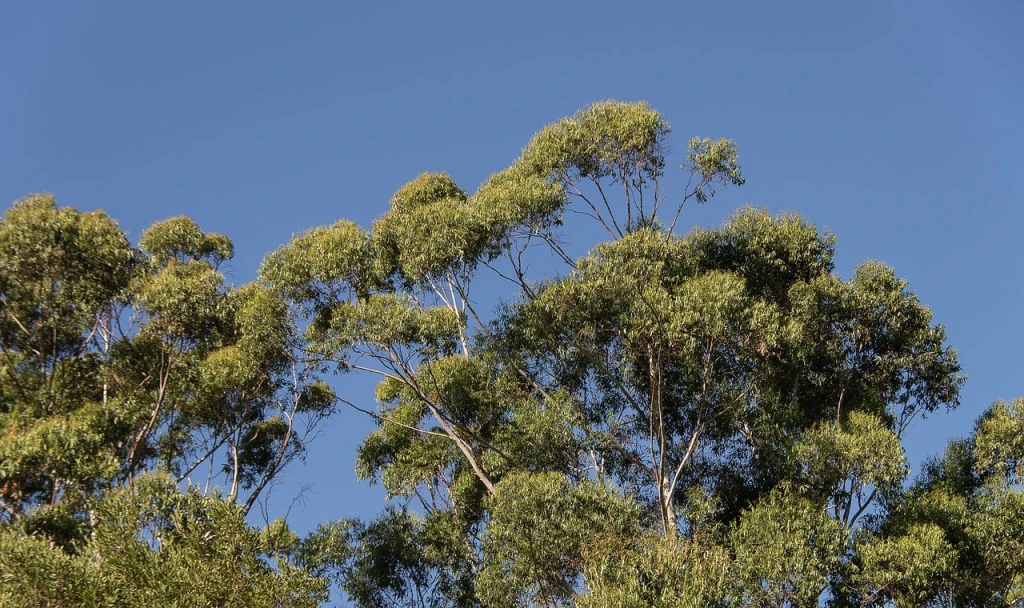
The Conservation Coast Project
Department of Izabal, Caribbean coast of Guatemala
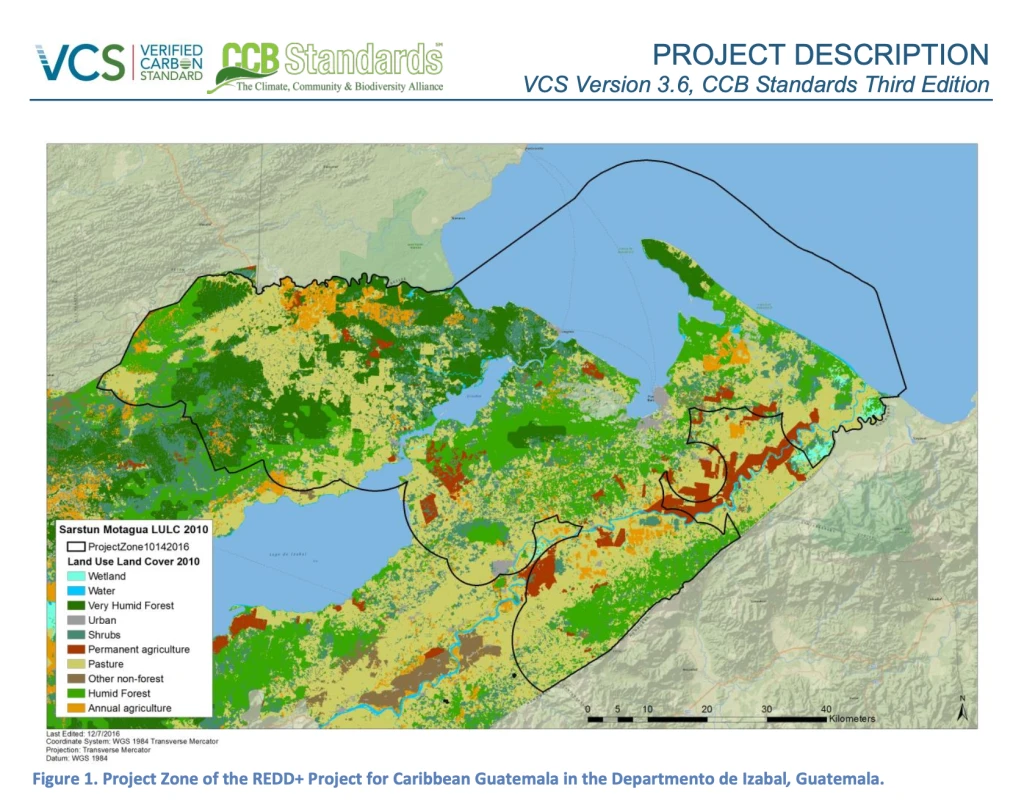
A 55,341-hectare grouped REDD+ project on Guatemala's Caribbean coast that protects standing rainforest from cattle expansion, slash-and-burn farming, and illegal logging. The project links five protected areas into a continuous corridor running from the Sarstún River on the Belize border to Sierra Caral on the Honduran frontier.
Protect trees in Guatemala through Evertreen and help keep this forest standing.
At a Glance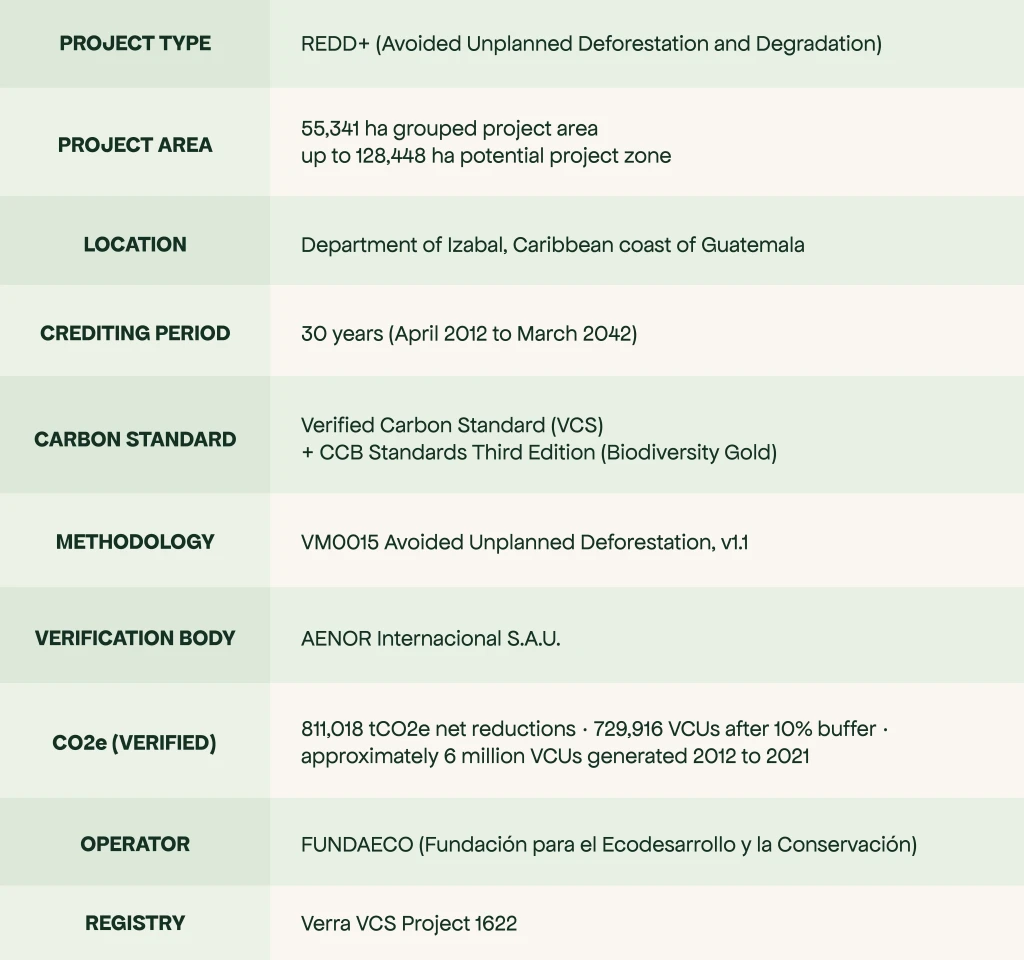
Project: Conservation Coast REDD+ Project (VCS 1622)
Location: Department of Izabal, Caribbean coast of Guatemala
Project area: 55,341 hectares of standing rainforest
Operator: FUNDAECO (Fundación para el Ecodesarrollo y la Conservación)
Certification: VCS verified + CCB Biodiversity Gold
Methodology: VM0015 v1.1 (Avoided Unplanned Deforestation)
Verifier: AENOR Internacional, S.A.U. (5th consecutive verification, issued 10 March 2023)
Verified emissions reductions (2021): 811,018 tCO₂e net reduction → 729,916 VCUs after 10% buffer
Total verified reductions (2012–2021): ~6 million VCUs
Endangered species protected: 30 globally Critically Endangered or Endangered species, including jaguar, Baird's tapir, West Indian manatee, and nine critically endangered amphibians
Crediting period: 30 years (April 2012 – March 2042)
What This Forest Is Up Against
Walk into Sierra Caral at dawn, and you may hear something the world nearly lost. A small frog called Craugastor campbelli, classed as critically endangered, was rediscovered at this site in 2021 after going undetected for six years. Park guards bleach their boots before entering the forest, every time, to keep out the chytrid fungus that has wiped out frog populations across the tropics. Evertreen connects you to the people doing this work.
The Caribbean coast of Guatemala holds the country's last great stretch of intact lowland tropical forest, climbing from mangroves and coastal lagoons up through humid rainforest to cloud forest peaks above 800 metres. It is one of the densest concentrations of biological diversity in Central America, and one of the most threatened. Between 2001 and 2010, the broader Sarstún-Motagua reference region lost forest at 3.41 percent every year, equivalent to 20,503 hectares cleared every twelve months. The forces driving the clearing are not abstract: smallholders and ranchers displaced by agro-industrial expansion in the surrounding region, looking for somewhere new to plant maize or graze cattle.
Without the project, the forest faces a steady attrition that adds up to a continental problem. The jaguar still walks this corridor. The West Indian manatee and Baird's tapir are documented inside the project area. Nine critically endangered amphibians depend on it. Each of these animals needs continuous, undisturbed forest at scale, and every hectare cleared narrows their range.
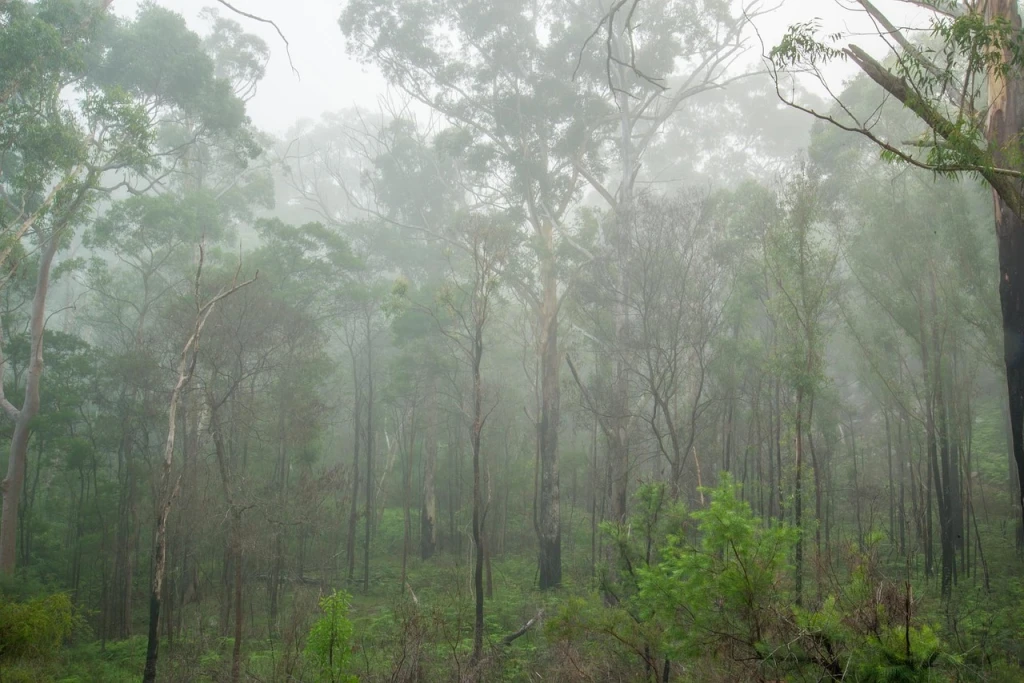
What the Project Does
When you protect trees in Guatemala through Evertreen, your contribution supports three areas of work:
Forest patrols across a 55,341-hectare protected corridor
Park guards, community monitors, and FUNDAECO staff conducted 1,475 forest patrols during 2021, working alongside CONAP (Guatemala's National Council of Protected Areas) and the Public Ministry. Across the project to date, more than 6,400 patrols have been carried out. The result for the 2021 monitoring period: 1,481 hectares of forest loss avoided compared to the baseline scenario. The project stitches five existing protected areas into a continuous protected corridor: Cerro San Gil, Río Sarstún, Punta de Manabique, Río Dulce National Park, and Sierra Caral.
A women's health network and Indigenous land rights
This is the project's most unusual signature. Most carbon projects fund forest patrols. This one also funds a network of 23 women's clinics and community first-aid posts that deliver sexual and reproductive health services, family planning, and primary care across remote communities. During 2021, the clinics reached 7,317 people, including 6,482 women, and 779 women received family planning support. The project also funds Indigenous land legalization for Q'eqchí Maya communities, who often live on land their families have held for generations without formal title. In 2021, 720 hectares were newly registered in the local and national land registries, giving those communities access to forest incentive payments and protection from displacement.
Forestry incentives and sustainable livelihoods
Many smallholders in Izabal cannot afford the cost of preparing the legal and technical files required to enroll in Guatemala's national forestry incentive programs. The project covers those costs and walks landowners through the application. As of the 2021 monitoring period, 278 families were receiving incentive payments under PINPEP and PROBOSQUE, and 14,997 hectares of watershed were under increased protection. Alongside the incentive work, the project trains farmers in agroforestry, ecotourism, and sustainable production of cardamom, rambutan, and other regionally appropriate crops on already-cleared land. In 2021, 317 local producers were participating in agroforestry projects, and the project supported 168 full-time jobs, 53 of which were held by women.
Real Numbers, Real People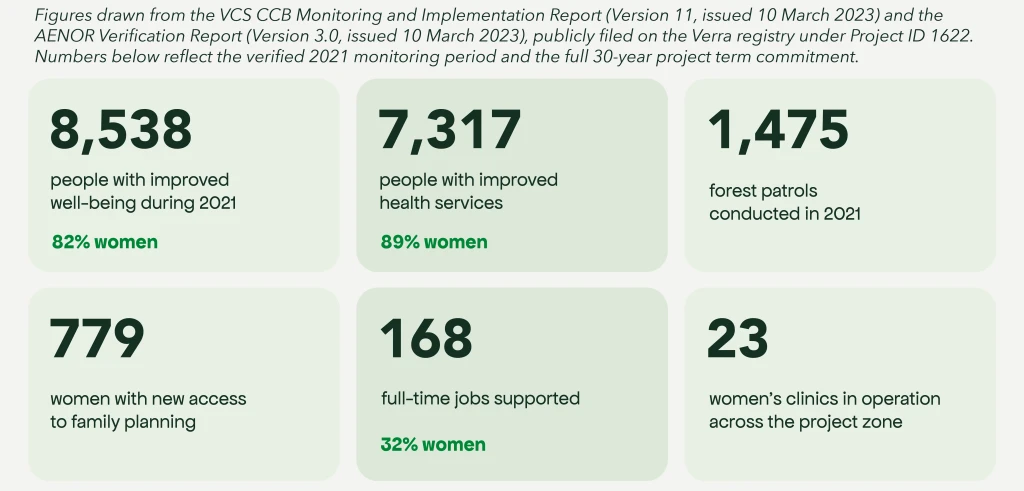
In 2021 alone, the Conservation Coast project delivered:
- 8,538 people with improved well-being (82% women)
- 7,317 people with improved health services (89% women)
- 1,475 forest patrols conducted across the protected corridor
- 779 women with new access to family planning
- 168 full-time jobs supported (32% women)
- 23 women's clinics in operation across the project zone
Beyond the numbers: the project trained 28 community midwives in villages where the nearest hospital can be hours away, supported 13 elected community health commissions that decide how local services are run, ran environmental education sessions for 1,029 students during the year, helped Q'eqchí Maya families register 720 hectares of ancestral land in the national property registry for the first time, and trained 23 park guards and community members in chytrid fungus prevention to protect the Sierra Caral amphibians.
A Globally Significant Refuge
The project area sits inside the Mesoamerican Biological Corridor, the wildlife bridge between North and South America. By land area, the project zone covers 18 percent of Guatemala. By bird diversity, it holds 58 percent of the country's bird species. Field surveys inside the project zone have documented 426 birds, 145 mammals, 55 amphibians, and 106 reptile species.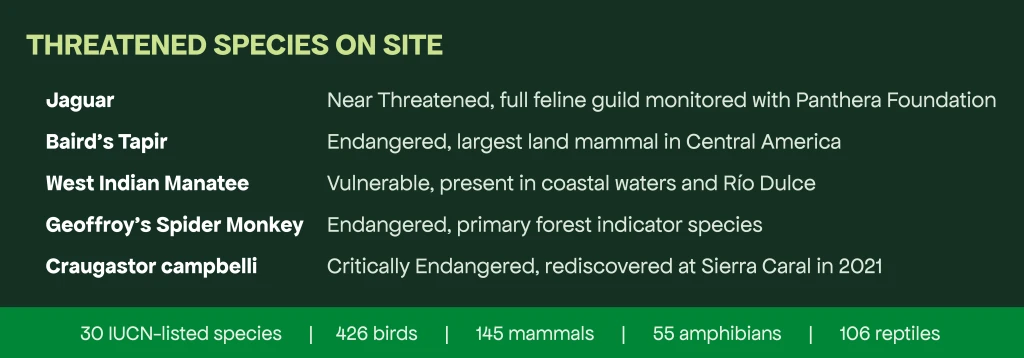 The amphibian work is the project's most distinctive biodiversity result. Sierra Caral was declared a National Protected Area by the Guatemalan Congress in 2014, in large part because of FUNDAECO's advocacy. To protect the six critically endangered amphibian species that live there, FUNDAECO created Reserva La Firmeza in 2012, a 2,480-hectare reserve dedicated to amphibian conservation, and has since acquired 957 additional hectares at Sierra Santa Cruz to extend the protected zone. Three of those species were confirmed during the 2021 monitoring period, including the Craugastor campbelli rediscovery.
The project also supports a binational jaguar corridor with the Panthera Foundation, monitoring habitat connectivity for the jaguar and four other felines: puma, ocelot, margay, and jaguarundi. The forests are home to West Indian manatee, Baird's tapir, Yucatán black howler monkey, and Geoffroy's spider monkey. The 2021 bird monitoring report confirmed that bird populations remain stable against the 2007 to 2011 reference period. In total, 30 globally Critically Endangered or Endangered species benefit from reduced threats as a direct result of project activities.
How the Carbon Numbers Work
The methodology compares two scenarios. The baseline models what would have happened without the project, in this case continued unplanned deforestation for cattle pasture, agriculture, and illegal logging at the rate measured across a surrounding Reference Region. The project scenario tracks what actually happened on the ground.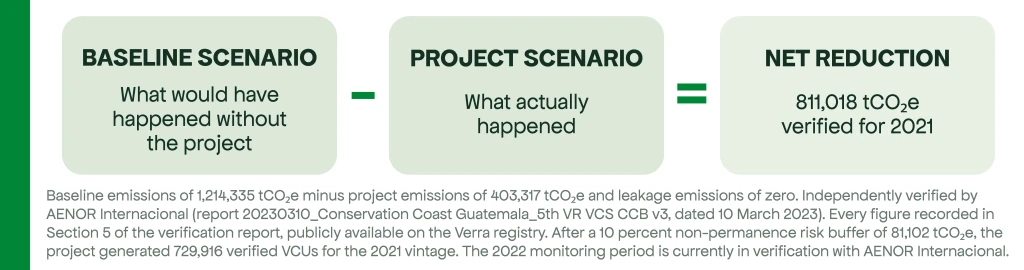 For the 2021 monitoring period, baseline emissions were modelled at 1,214,335 tCO₂e. Project emissions came to 403,317 tCO₂e. Leakage was assessed at zero, because deforestation observed in the leakage belt was below the baseline allowance. The difference between these scenarios produced 811,018 tCO₂e in net emission reductions. After a 10 percent non-permanence risk buffer of 81,102 tCO₂e, the project generated 729,916 verified VCUs for the year. Across the verified period from 2012 to 2021, the project has produced an estimated 6,900,404 tCO₂e in net emission reductions, of which approximately 6 million VCUs have been generated after buffer allocations. For the most current issuance and retirement data, check the Verra registry directly.
Independently Verified
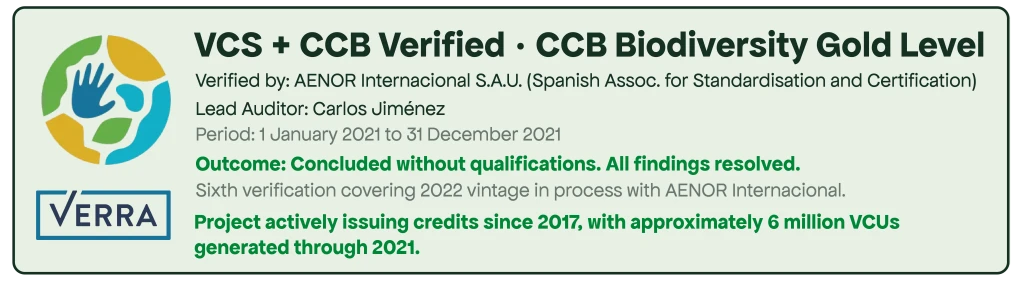 Evertreen selects projects that meet independent verification standards. The Conservation Coast project has been verified five consecutive times by AENOR Internacional, the Spanish accreditation body, against the standards of the Verified Carbon Standard and the Climate, Community and Biodiversity Alliance. The most recent verification report, covering the 2021 monitoring period, was issued on 10 March 2023 by lead auditor Carlos Jiménez and approved by Jose Luis Fuentes.
The 2021 verification was concluded without qualifications, with all findings resolved. The project holds CCB Biodiversity Gold status and has generated approximately 6 million VCUs across the 2012 to 2021 verified period.
Every hectare protected helps keep 55,341 hectares of Guatemala's Caribbean rainforest standing. The jaguar still walks this corridor. Migratory birds still pass through every year. The frogs of Sierra Caral are still being counted, one by one. Help keep them where they belong, in the forest.
Protect trees in Guatemala through Evertreen.
Frequently Asked Questions
Can I protect trees in Guatemala through Evertreen?
Yes. Evertreen offers tree protection and forest conservation in Guatemala. Your contribution supports the Conservation Coast REDD+ project, one of the largest Verra-certified forest conservation projects in Central America, protecting 55,341 hectares of Caribbean rainforest and home to nine critically endangered amphibian species.
How does Evertreen verify its projects?
Evertreen selects projects that are backed by independent third-party verification. For this project, all data on this page comes from audited monitoring reports that are publicly available on the Verra registry under Project ID 1622. Evertreen does not own or operate the projects directly. We act as the platform that connects you to certified conservation work.
Can I gift trees linked to this project?
Yes. Evertreen offers digital gift certificates for forest conservation in Guatemala and 35+ other countries. It is a meaningful, lasting gift that supports real conservation.
Does this project protect endangered species?
Yes. The project area is documented habitat for 30 globally Critically Endangered or Endangered species, including the jaguar, Baird's tapir, West Indian manatee, Geoffroy's spider monkey, and nine critically endangered amphibians. A small frog called Craugastor campbelli was rediscovered inside Sierra Caral in 2021, the first detection at the site since monitoring began in 2015.
Is Evertreen a good option for corporate ESG and CSR reporting?
Yes. The project holds VCS verification and CCB Biodiversity Gold status, both widely recognised for corporate sustainability reporting. Evertreen provides tracking, reporting tools, and a public impact page for your company.
Have more questions about how Evertreen works? Visit our FAQ.
Reviewed by Evertreen. Last updated: 5 May 2026.
Sources: VCS CCB Monitoring and Implementation Report, Verra Project 1622, version 11, issued 10 March 2023; CCB and VCS Verification Report by AENOR Internacional, version 3.0, issued 10 March 2023; Project Description, Verra Project 1622, version 3.0, March 2017; VCS Non-Permanence Risk Report v4.0 for Risk Area B, April 2021. CO₂e figures are projections calculated under VCS Methodology VM0015 v1.1. The Conservation Coast Project is operated by FUNDAECO (Fundación para el Ecodesarrollo y la Conservación). Evertreen enables you to finance this independently certified project. Evertreen does not own or operate the project directly.
