

GreenTrees ACRE: Arkansas
Discover how Evertreen helps replant 136,650 acres of the Mississippi Valley for the black bear, migratory songbirds, and 500 Delta landowners.
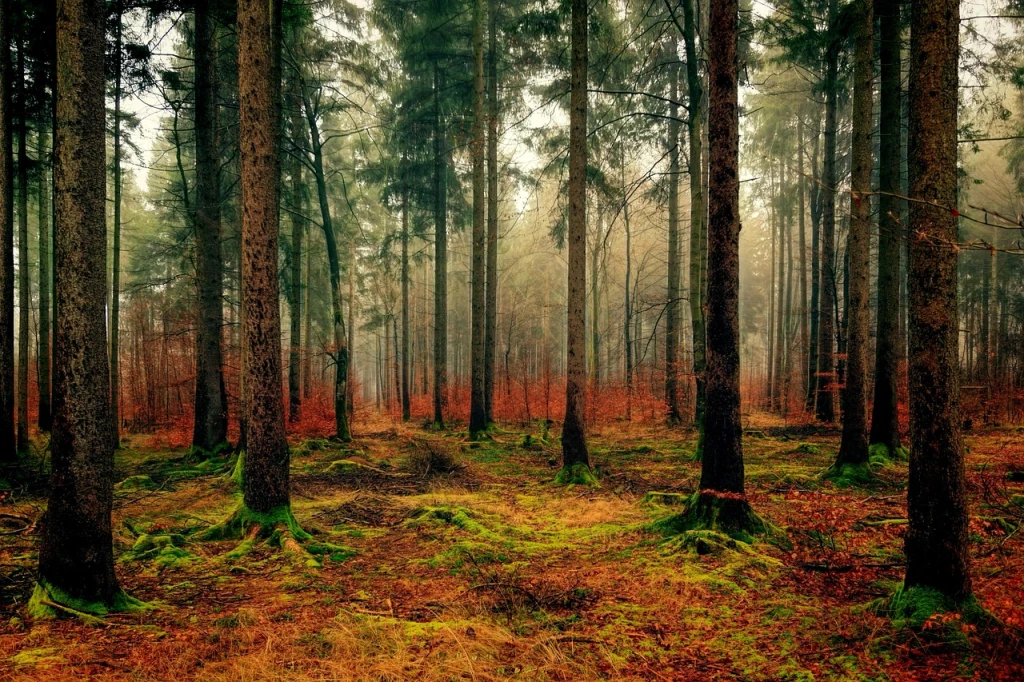
The GreenTrees ACRE Project
Mississippi Alluvial Valley, primary state Arkansas
A 136,650-acre programmatic reforestation project that plants native hardwoods on former agricultural land across the Mississippi Alluvial Valley. The project interplants fast-growing cottonwoods with long-lived oaks to rebuild bottomland forest faster than natural regeneration would. Arkansas holds the project's largest single-state footprint, with additional parcels across the Lower Mississippi Valley in Mississippi, Louisiana, Tennessee, Kentucky, Missouri, and Illinois, plus a separate riparian forest enrollment in Virginia.
Plant trees in Arkansas through Evertreen and help rebuild the Delta forest.
At a Glance
Project: GreenTrees ACRE (Advanced Carbon Restored Ecosystem) (ACR Project 114)
Location: Mississippi Alluvial Valley, primary state Arkansas, with parcels across seven other US states
Project area: 136,650 acres of replanted bottomland forest
Operator: GreenTrees, LLC, a subsidiary of ACRE Investment Management
Certification: ACR verified · ACR Forest Carbon Project Standard v2.1
Methodology: ACR Methodology for Afforestation and Reforestation of Degraded Land v1.0, March 2011
Verifier: Aster Global Environmental Solutions, Inc. (most recent verification issued 26 January 2024)
Verified emissions reductions (2021–2022): 1,521,929 tCO₂e net removals; 252,964 tCO₂e contributed to the ACR buffer pool
Total verified reductions (2008–2022): 7,792,791 tCO₂e cumulative
Endangered species supported: Bottomland hardwood ecosystem species, including the Louisiana black bear, Cerulean Warbler, Wood Stork, the federally Endangered Pondberry shrub, and Swallow-tailed Kite
Crediting period: 40 years per parcel; project validated to continue planting through 2047, with credit issuance through 2086
What This Forest Is Up Against
Stand on a levee in the Arkansas Delta in early autumn, and you can see what was lost. The horizon is row crop in every direction, broken only by drainage ditches and the occasional remnant cypress brake. The bottomland hardwood forest that once covered this ground from southern Illinois down to the Gulf of Mexico has been called North America's rainforest. About 80 percent of it is gone.
The Mississippi Alluvial Valley once held roughly 25 million acres of bottomland hardwoods. Flooded forests of Nuttall oak, Water oak, Willow oak, Sweetgum, Cypress, and Tupelo supported the largest concentration of migratory birds on the continent. Most of that forest was cleared between the 1950s and the early 1980s, when rising soybean prices and federal flood control let farmers drain the floodplain at industrial scale. By the time the clearing slowed, the Delta had lost more bottomland forest than any other region of the United States.
What remains is fragmented. The black bear, once distributed across the entire valley, contracted to a handful of refuges. The Louisiana black bear was federally listed as Threatened in 1992. Cerulean Warbler numbers across the eastern US have fallen more than 70 percent since 1966, in part because the canopy bottomland it nests in barely exists anymore. Every spring, 40 percent of North America's waterfowl still funnel through this corridor on their way north. They now pass over corn and soybeans where they once landed in flooded forest.
The forest has not come back on its own. Cleared bottomland soil is dense, often poorly drained, and dominated by aggressive grasses. Without human intervention, these fields stay fields. Replanting them at scale is the only way to rebuild what the Delta lost.
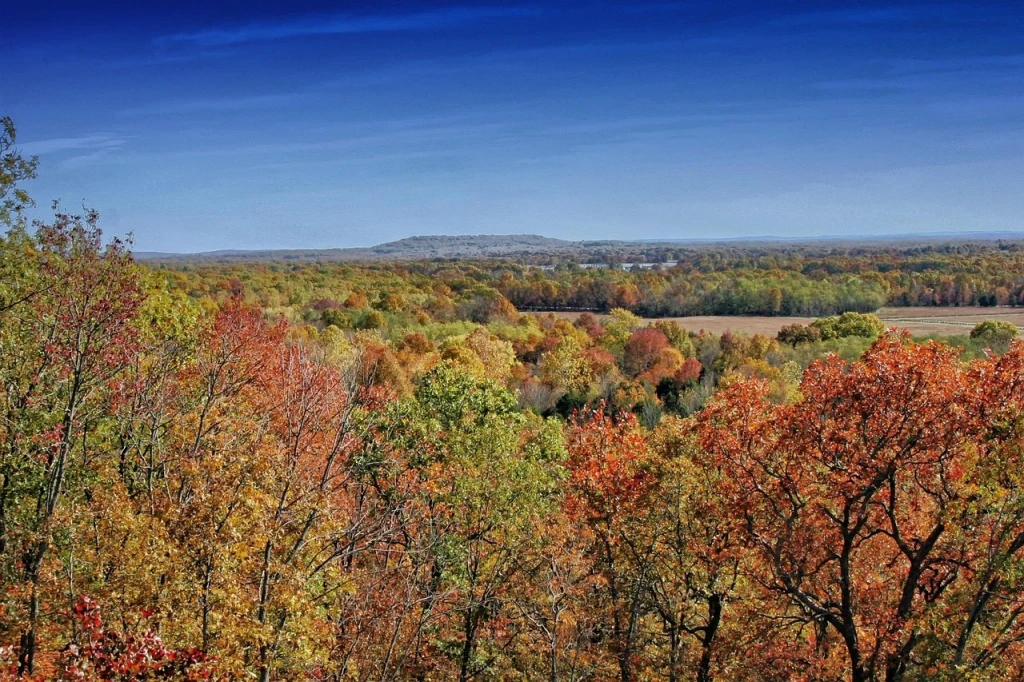
What the Project Does
When you plant trees in Arkansas through Evertreen, your contribution supports three areas of work:
Replanting 136,650 acres of former farmland
GreenTrees, LLC has restored 136,650 acres of degraded agricultural land to native bottomland forest since the project began in 2008. More than 40 million trees have been planted using a 302-trees-per-acre design that interplants fast-growing cottonwoods with long-lived oaks, including Nuttall oak, Water oak, Willow oak, and Cherrybark oak, alongside Sweet pecan, Green ash, and Sweetgum. The cottonwoods grow quickly and shelter the slow-growing hardwoods from direct sun, producing habitat faster than planting hardwoods alone would allow. Most cottonwoods are removed in scheduled thinnings between years 8 and 23, leaving behind a native hardwood forest. Field foresters live in the region and inspect each tract on a continuous schedule.
500 landowners and 40-year commitments
More than 500 Delta landowners have enrolled their land in the GreenTrees program. Each signs a 40-year carbon agreement that places restrictive covenants on the property, recorded in the official land records of the relevant state or county. Roughly 46 percent of enrolled acres are also held under permanent conservation easements, most of them through the USDA Natural Resources Conservation Service Wetland Reserve Easement program. NRCS monitors those easements through annual aerial surveillance. The project pays landowners a share of carbon credit revenue, allowing them to keep ownership of their land while contributing to conservation. Many of these acres sit in counties that rank among the poorest in the United States.
Restoring the watershed and wildlife habitat
Reforestation in the Delta is also a water and wildlife project. The U.S. Geological Survey estimates that for every 100,000 acres of farmland restored to bottomland forest, 1.55 million pounds of nitrogen and phosphorus runoff to the Mississippi River are avoided each year, reducing the hypoxic dead zone in the Gulf of Mexico. EPA estimates that one acre of cropland in the lower Mississippi loses roughly 12 tons of soil annually. The project's permanent vegetation cover effectively stops that erosion on enrolled tracts. Federal biologists report that within seven years a GreenTrees forest holds roughly twice the migratory birds of a comparable single-species planting. The interplanting design is endorsed by the National Wildlife Federation, Audubon Arkansas, Arkansas Game and Fish, the Arkansas Forestry Commission, and Wildlife Mississippi. The project sits within the geographic priority area of the National Fish and Wildlife Foundation's Lower Mississippi Alluvial Valley Restoration Fund, a congressionally-chartered conservation partnership with USDA NRCS, the US Forest Service, USFWS, International Paper, and the Walton Family Foundation.
Real Numbers, Real People
Across the project's 17-year operating record, GreenTrees ACRE has delivered:
- 136,650 acres of former farmland restored to native bottomland forest
- More than 40 million trees planted across the project since 2008
- More than 500 landowner families participating across the Lower Mississippi Valley and Virginia
- 7,792,791 tCO₂e in cumulative verified carbon removals through 2022
- 12 successful ex-post verifications completed by independent third parties since 2011
- Zero reversals in 17 years of operation
Beyond the numbers: GreenTrees was the first forestry project ever approved by the American Carbon Registry, with the initial verification completed in February 2011. The project has been continuously verified every year or two since then, most recently by Aster Global Environmental Solutions in January 2024 for the 2021–2022 monitoring period. Co-founders Carey Crane and Chandler Van Voorhis received the 2002 ChevronTexaco Conservation Award, recognising leadership in private-sector environmental conservation. The project also received the 2009 Southern Growth Policies Board Innovator Award and is the carbon offset partner of the Arbor Day Foundation in the Mississippi River Valley. It is the largest verified reforestation carbon credit program in the United States, as recognised by the Arbor Day Foundation.
A Globally Significant Refuge
The Mississippi Alluvial Valley sits at the convergence of the Mississippi and Atlantic flyways, the two largest bird migration corridors in North America. Sixty percent of all North American bird species pass through the region during spring or fall migration, and 40 percent of the continent's waterfowl use the valley as wintering or staging habitat. Restoring bottomland forest at scale puts food, cover, and nesting habitat back into a corridor that lost most of its native canopy in living memory.
The project area sits within historic range of the Louisiana black bear, a subspecies federally listed as Threatened from 1992 to 2016 and now recolonising restored bottomland tracts across Arkansas, Mississippi, and Louisiana. Cerulean Warbler populations across the eastern United States have declined more than 70 percent since 1966; the species depends on tall, closed-canopy bottomland for nesting. Wood Stork, federally listed and reclassified from Endangered to Threatened in 2014, forages in seasonally flooded bottomland forest. The federally Endangered shrub Pondberry (Lindera melissifolia) survives almost exclusively in bottomland hardwood understory in the Lower Mississippi Valley. Swallow-tailed Kite, once nearly lost from the United States, returns each year to nest in mature riparian forest across the Delta.
Federal biologists studying the project's tracts estimate that a GreenTrees stand holds roughly twice the migratory birds of a comparable hardwood-only planting at the seven-year mark, owing to the cottonwood-and-hardwood interplanting design. Independent endorsements come from the National Wildlife Federation, Audubon Arkansas, the Black Bear Conservation Coalition, Wildlife Mississippi, and the Arkansas Forestry Commission.
How the Carbon Numbers Work
The carbon math for this project is straightforward in structure but rigorous in measurement. The baseline scenario is degraded agricultural land, which holds almost no carbon in vegetation or in soil. The project scenario is bottomland hardwood forest the project plants and monitors. The difference between the two, minus any unavoidable emissions from project activities, is what gets credited. Because this is an afforestation project rather than an avoided-deforestation project, leakage is calculated at zero. The project does not displace agriculture elsewhere.
The 2021–2022 monitoring period generated 1,521,929 tonnes of CO₂ equivalent in verified emission removals. The project contributed 252,964 tonnes to the ACR buffer pool as a non-permanence safeguard. Cumulative verified removals through 2022 sit at 7,792,791 tCO₂e. Credits are issued ex-post, meaning each tonne is only issued after independent verifiers confirm the carbon is on the ground. The project has not had a single reversal in 17 years of operation. For the most current issuance and retirement data, check the American Carbon Registry directly.
Independently Verified
Evertreen selects projects that meet independent verification standards. The GreenTrees ACRE project has been continuously verified since 2011 under the American Carbon Registry, the first private greenhouse gas registry in the United States. The most recent verification covered the 2021–2022 monitoring period and was completed by Aster Global Environmental Solutions, Inc., an Ohio-based firm accredited by the ANSI National Accreditation Board under ISO 14065:2020 and ISO 14064-3:2019. The verification report was issued on 26 January 2024 by lead verifier Shawn McMahon, with senior internal review by Barbara Toole O'Neil. Earlier vintages were verified by Environmental Services, Inc. and TÜV SÜD America.
The 2021–2022 verification was concluded without qualifications, with all findings resolved. The project is the first forestry project ever approved under the ACR Standard and has generated 7,792,791 tonnes of CO₂ equivalent in verified removals across the 2008–2022 verified period.
Every acre replanted helps rebuild the Mississippi Valley bottomland forest. The black bear is returning. The migratory birds still come every spring. The Pondberry, the Cerulean Warbler, and the Wood Stork are still finding their way back to a forest the Delta nearly lost. Help keep them where they belong, in the canopy.
Plant trees in Arkansas through Evertreen.
Frequently Asked Questions
Can I plant trees in Arkansas through Evertreen?
Yes. Evertreen offers tree planting and forest restoration in Arkansas. Your contribution supports the GreenTrees ACRE project, the first afforestation project ever approved by the American Carbon Registry, replanting 136,650 acres of former Delta farmland with native bottomland hardwoods.
How does Evertreen verify its projects?
Evertreen selects projects that are backed by independent third-party verification. For this project, all data on this page comes from audited monitoring reports that are publicly available on the American Carbon Registry under Project 114. Evertreen does not own or operate the projects directly. We act as the platform that connects you to certified conservation work.
Can I gift trees linked to this project?
Yes. Evertreen offers digital gift certificates for forest restoration in Arkansas and 35+ other countries. It is a meaningful, lasting gift that supports real conservation.
Does this project protect endangered species?
Yes. The restored forest provides habitat for species that depend on Mississippi Valley bottomland hardwoods, including the Louisiana black bear, the Cerulean Warbler (Vulnerable on the IUCN list with populations down more than 70 percent since 1966), the Wood Stork (federally Threatened), the federally Endangered Pondberry shrub (Lindera melissifolia), and the Swallow-tailed Kite. The project corridor is used by 40 percent of North America's waterfowl and 60 percent of all North American bird species during migration.
Is Evertreen a good option for corporate ESG and CSR reporting?
Yes. The project holds American Carbon Registry verification, with twelve successful ex-post verifications since 2011 and cumulative verified removals of 7,792,791 tonnes of CO₂ equivalent through 2022. Evertreen provides tracking, reporting tools, and a public impact page for your company.
Have more questions about how Evertreen works? Visit our FAQ.
Reviewed by Evertreen. Last updated: May 2026.
Sources: ACR Verification Report by Aster Global Environmental Solutions, Inc., Project ACR114, version 5, issued 26 January 2024; ACR Verification Opinion Statement by Aster Global Environmental Solutions, Inc., issued 26 January 2024; GreenTrees ACRE Project Description Addendum on Sustainable Development, 2022; GreenTrees ACRE Project Description v14, December 2011. CO₂e figures verified under ACR Methodology for Afforestation and Reforestation of Degraded Land v1.0 (March 2011). The GreenTrees ACRE project is operated by GreenTrees, LLC, wholly owned by ACRE Investment Management. Evertreen enables you to finance this independently certified project. Evertreen does not own or operate the project directly.
