

Evertreen's Corporate Tree Planting Supports ESG Goals

9 Oct 2024 in Corporate planting

Evertreen's Corporate Tree Planting Supports ESG Goals

Tree planting is a crucial strategy that enables companies to achieve carbon neutrality while actively supporting their ESG goals. By offsetting their carbon footprint, organizations can contribute to the fight against climate change, reducing CO2 emissions in line with their own pollution levels.


The Principle of Carbon Neutrality

Carbon neutrality refers to a state of zero net emissions, achieved by balancing pollutants produced with offsetting actions such as the absorption of carbon released into the atmosphere. For companies, reaching carbon neutrality does not mean entirely avoiding CO2 emissions—an impossible feat. Instead, it involves:

  • Significantly Reducing Carbon Emissions: Companies must implement measures to lower the carbon dioxide emissions generated by their production activities.
  • Offsetting Irreducible Emissions: For emissions that cannot be fully eliminated, investing in CO2 absorption programs, like planting trees, becomes essential.

Do you want to know more about carbon neutrality? Read “Achieving Net Zero with SDGs and Carbon Offset Standards” on our blog


How Evertreen Supports Carbon Neutrality Through Tree Planting

Evertreen plays a pivotal role in helping businesses achieve carbon neutrality through effective tree planting initiatives. By integrating tree planting into their sustainability strategies, companies can provide a tangible solution for absorbing atmospheric CO2. Each tree sequesters approximately 48 pounds (about 22 kilograms) of CO2 annually, depending on species and growth conditions. Participating in Evertreen’s reforestation or afforestation projects allows businesses to directly increase forest cover, which is critical in combating climate change.
Additionally, Evertreen's initiatives offer benefits beyond carbon offsetting. They enhance biodiversity, improve soil health, and provide habitats for wildlife, aligning with corporate social responsibility (CSR) objectives. These efforts can improve public perception, as consumers increasingly favor brands demonstrating environmental stewardship. Engaging employees in tree planting events organized by Evertreen also boosts morale and fosters community within the workplace, enhancing employee engagement.
By incorporating tree planting into their corporate sustainability efforts through Evertreen, businesses can meet Environmental, Social, and Governance (ESG) criteria—key metrics gaining importance among investors and stakeholders. Demonstrating a commitment to sustainability allows companies to attract socially conscious investors and stand out in a competitive market. Ultimately, Evertreen empowers organizations to take meaningful action against climate change, promoting a greener, more sustainable future for all.

What Are ESG Criteria? Understanding Environmental, Social, and Governance Factors for Sustainable Business


ESG—Environmental, Social, and Governance—refers to the three key factors used to measure the sustainability and ethical impact of a company's operations. The Environmental aspect focuses on efforts to reduce the carbon footprint and manage natural resources responsibly. The Social component evaluates relationships with employees, suppliers, customers, and the communities in which the company operates, addressing labor practices, diversity, and human rights. Governance assesses leadership, executive pay, audits, internal controls, and shareholder rights. By adopting strong ESG practices, businesses can build a positive reputation, enhance long-term profitability, and attract socially conscious investors while contributing to a sustainable future. 
Read also: “Planting Trees for Global Sustainability” on our blog.

 
How Evertreen's Tree Planting Supports ESG Goals for Businesses


Tree planting serves as a powerful strategy for companies aiming to support their ESG goals. Through Evertreen's initiatives, businesses can directly tackle urgent environmental challenges such as climate change, deforestation, and biodiversity loss. By engaging in tree planting, companies not only offset their carbon emissions but also contribute to healthier ecosystems, an essential aspect of ESG criteria. Companies investing in Evertreen’s reforestation efforts showcase their commitment to sustainable practices, enhancing brand reputation and attracting eco-conscious consumers.
Moreover, Evertreen’s initiatives often involve local communities, addressing the social aspect of ESG. These projects can create job opportunities, improve local infrastructure, and enhance community resilience against climate impacts. Actively involving employees in tree planting events fosters team spirit and promotes corporate social responsibility, leading to higher employee satisfaction and retention rates.
From a governance perspective, businesses prioritizing ESG practices, including tree planting through Evertreen, are perceived as more transparent and accountable. This boosts investor confidence, as stakeholders increasingly prefer companies with robust sustainability strategies. Aligning tree planting initiatives with ESG goals enables businesses to make a positive impact on the environment and society while positioning themselves favorably for long-term success.

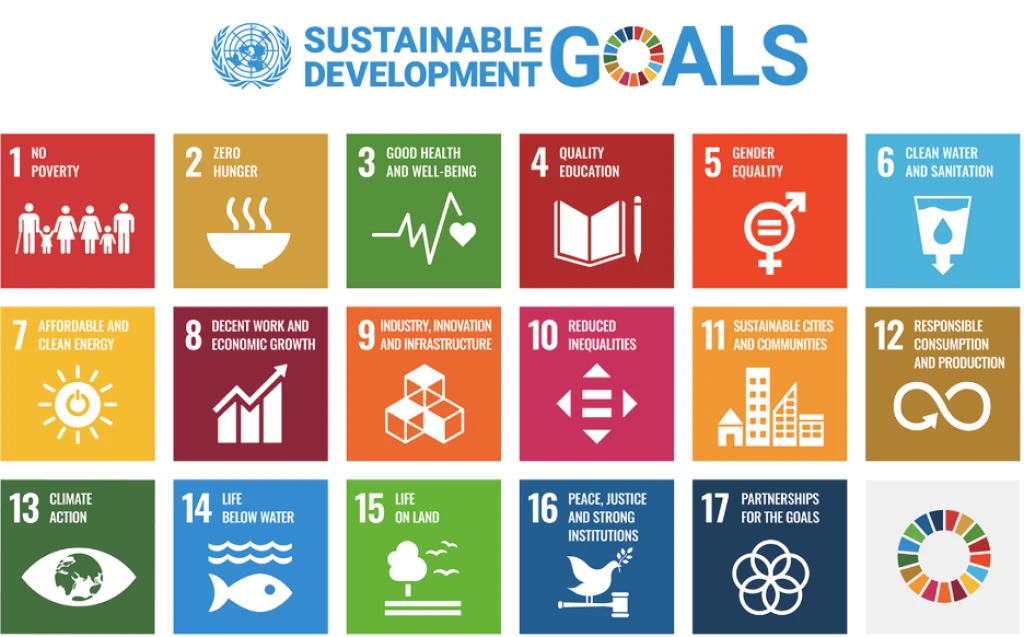
Do you want to learn more about ESG? Read our article: The Role of Evertreen in Achieving Sustainable Development Goals through Planting Trees

Understanding Evertreen: A Streamlined and Effective Tree Planting Solution


Evertreen offers a user-friendly platform that simplifies the online process of planting trees for businesses. Here’s how the system works:

  1. Select Your Project: Start by choosing a reforestation project  that aligns with your sustainability objectives. Evertreen provides diverse options, each with unique environmental and social benefits. Whether focusing on rainforest restoration, community-driven projects, or combating desertification, you’ll find a suitable project.
  2. Planting and Ongoing Care: After selecting a project, Evertreen takes care of planting and maintaining the trees. This commitment extends beyond a one-time initiative; it reflects dedication to nurturing the trees for long-term growth and vitality. Evertreen collaborates with local communities and experts to ensure effective and sustainable reforestation activities.
  3. Regular Monitoring and Reporting: Evertreen emphasizes transparency. Businesses receive regular updates and detailed impact reports highlighting the progress of their contributions. This approach fosters accountability and enables companies to effectively communicate their environmental initiatives to stakeholders.
  4. Inspire and Engage: The benefits of these projects extend beyond environmental improvements. They enhance corporate reputation, boost employee engagement, and create a compelling narrative that resonates with customers and the wider community.

Evertreen’s holistic approach ensures that businesses contribute to environmental sustainability while building a strong brand presence in today’s eco-conscious market.


The Economic Benefits of Tree Planting


Investing in tree planting initiatives through Evertreen not only aids in achieving carbon neutrality but also presents significant economic benefits for companies. Research indicates that for every dollar invested in reforestation, there can be a return of up to $30 in ecosystem services and other economic benefits, such as increased productivity in surrounding areas. By enhancing biodiversity and restoring ecosystems, businesses can also help create a more resilient environment that supports agriculture, tourism, and local economies. As stakeholders increasingly recognize the importance of environmental stewardship, aligning business practices with sustainability through tree planting can improve profitability and long-term viability.

Measuring the Impact of Tree Planting


For companies committed to transparency and accountability, Evertreen offers comprehensive metrics to measure the impact of their tree planting efforts. By utilizing advanced monitoring technologies, Evertreen tracks the growth and health of planted trees, providing businesses with data-driven insights into their contributions to carbon offsetting and biodiversity enhancement. This level of transparency not only strengthens investor confidence but also allows companies to share their sustainability achievements with stakeholders, further reinforcing their commitment to ESG principles. By showcasing tangible results, businesses can build trust with consumers and investors alike, solidifying their position as leaders in environmental stewardship.


Do you want to know more about Evertreen? Take a look at all our reforestation projects

Join the Movement for a Sustainable Future

As climate change continues to pose a threat to our planet, the call for action has never been more urgent. Evertreen invites businesses and individuals to join the movement toward a more sustainable future by actively participating in tree planting initiatives. Whether through corporate sponsorship, community engagement, or personal commitment, every effort counts in the fight against climate change. Together, we can create a greener, healthier planet that benefits not only current generations but also those to come. By choosing to plant trees with Evertreen, companies can make a meaningful impact on their carbon footprint while aligning their operations with essential ESG criteria.


Feeling inspired by the transformative power of trees? Join Evertreen in planting trees today!

Related articles

29 Sep 2026

What Is ESG? A Simple Guide for Small Businesses

ESG stands for Environmental, Social, and Governance — a simple framework for how a company manages its impact and risks across those three areas. For a small business it is less about glossy reports and more about answering practical questions from customers, tenders, and staff: how your work affects the planet, how you treat the people around you, and how honestly you run the numbers. You do not need a sustainability department to make a start — just a clear head and a willingness to measure before you claim anything. The three pillars of ESG, in plain English Environmental. Your footprint — energy use, business travel, waste, and the CO₂ your operations produce. Social. How you treat employees, customers, suppliers, and the wider community around you. Governance. How decisions get made: ethics, data protection, fair pay, and honest record-keeping. Why the three sit together. Combined, they signal whether a business is resilient and trustworthy, not merely profitable this quarter. What it is not. ESG is not a marketing badge; treated that way it quickly becomes a liability rather than an asset. Why small businesses are suddenly being asked about ESG Even if you never publish a report, ESG questions arrive through the back door. Larger customers increasingly pass their own supply-chain rules down to smaller suppliers, public and corporate tenders now award points for environmental credentials, and employees and investors want to know what you actually stand for. Almost all of these conversations begin with a single number: your carbon footprint. You can produce a first estimate in minutes with a free CO₂ calculator, which turns a vague expectation into a figure you can put on paper and improve over time. There is a regulatory undercurrent too. Large companies in the EU now face structured sustainability reporting, and the practical effect for an SME is that their questionnaires get longer and more specific. You are rarely regulated directly; you are regulated through your customers. What you will actually be asked for Supplier questionnaires vary in length but converge on the same handful of items. Prepare these once and you can answer most of them: Your measured carbon footprint, with the reporting year and the boundary stated. Whether you have a reduction target, and what it covers. What you offset, under which standard, with evidence of retirement. Basic people policies — pay, health and safety, anti-discrimination, modern slavery statement where applicable. Governance basics — data protection, anti-bribery, who is accountable for all of the above. A single well-maintained page covering those five items answers most questionnaires and takes an afternoon rather than a consulting engagement. Practical first steps: start with the environmental The E is the most actionable pillar for a small team, so begin there. Measure your footprint, cut what you genuinely can — switch to greener suppliers, reduce travel, waste less — and then offset only the remainder rather than pretending it is already zero. Offsetting is where transparency matters most: Evertreen lets you fund real tree planting from £1.5 per tree, and for compliance-grade reporting you can request certified Verra and Gold Standard credits. The order is the point — measure, reduce, then offset — because buying credits before you have cut anything is exactly what regulators now single out. The method is in how to calculate your business carbon footprint. Don't neglect S and G — they are cheaper than you think Small businesses often assume the social and governance pillars require formal programmes. Mostly they require writing down what you already do. Fair pay practices, a clear complaints route, supplier payment terms you actually honour, a data protection policy that matches reality, and a named person accountable for decisions — that is a credible S and G position for a company of ten people. What damages a small business is not the absence of a glossy policy; it is a policy that says something the company visibly does not do. How visible tree planting supports the social side Environmental action doubles as social proof when it is visible and honest. Every tree Evertreen funds belongs to a named project whose location, photos and updates are published, so you can show customers where their impact sits instead of asking them to trust a logo — useful both for credible reporting and for engaging your own community. Some businesses turn this into branded corporate gifting, planting a tree for each client win or employee milestone. One caution worth repeating: never let planting become a substitute for reduction. Claiming to be "carbon neutral" while your emissions keep climbing is greenwashing, and it does more reputational damage than staying quiet. Note too that from 27 September 2026 the EU bans marketing a product to consumers as carbon neutral on the basis of offsetting. Keep the story modest, specific, and backed by numbers you can defend — see are carbon offsets greenwashing? Frequently asked questions Does a small business really need to worry about ESG? If you sell to larger companies, bid for tenders, or want to attract good staff and investors, yes — you will be asked. Starting small with a measured carbon footprint is usually enough to stay in the conversation. Where should a small business start with ESG? Start with the environmental pillar because it is the most measurable. Calculate your CO₂ footprint, reduce what you can, and offset the rest transparently before worrying about the social and governance pillars. Is planting trees enough to make my business sustainable? No. Tree planting offsets emissions you cannot yet avoid, but it should follow real reduction. Used honestly alongside cuts to energy and travel, it is a credible part of the plan — not a replacement for it. Do we need an ESG report? Rarely at SME scale. A one-page summary of your footprint, targets, offsetting evidence and key policies covers most of what customers actually ask for. Is ESG legally required for small companies? Usually not directly. The requirements land on large companies, and reach smaller suppliers through procurement questionnaires and contract terms. How much does getting started cost? The measurement can be free with a calculator and a few hours of time. The meaningful spend is in the reductions themselves and, optionally, in offsetting the residual. What is the most common mistake? Claiming more than you can evidence. A modest, documented position is worth far more in a tender than an ambitious one that falls apart under a follow-up question. { "@context": "https://schema.org", "@type": "FAQPage", "mainEntity": [ {"@type": "Question", "name": "Does a small business really need to worry about ESG?", "acceptedAnswer": {"@type": "Answer", "text": "If you sell to larger companies, bid for tenders or want to attract good staff and investors, yes. Starting with a measured carbon footprint is usually enough to stay in the conversation."}}, {"@type": "Question", "name": "Where should a small business start with ESG?", "acceptedAnswer": {"@type": "Answer", "text": "Start with the environmental pillar because it is the most measurable. Calculate your CO2 footprint, reduce what you can, and offset the rest transparently."}}, {"@type": "Question", "name": "Is planting trees enough to make my business sustainable?", "acceptedAnswer": {"@type": "Answer", "text": "No. Tree planting offsets emissions you cannot yet avoid but should follow real reduction. Used honestly alongside cuts to energy and travel it is a credible part of the plan."}}, {"@type": "Question", "name": "Do small businesses need an ESG report?", "acceptedAnswer": {"@type": "Answer", "text": "Rarely at SME scale. A one-page summary of your footprint, targets, offsetting evidence and key policies covers most of what customers ask for."}}, {"@type": "Question", "name": "Is ESG legally required for small companies?", "acceptedAnswer": {"@type": "Answer", "text": "Usually not directly. Requirements land on large companies and reach smaller suppliers through procurement questionnaires and contract terms."}}, {"@type": "Question", "name": "How much does starting with ESG cost?", "acceptedAnswer": {"@type": "Answer", "text": "Measurement can be free with a calculator and a few hours of time. The meaningful spend is in the reductions themselves and optionally in offsetting the residual."}}, {"@type": "Question", "name": "What is the most common ESG mistake for small businesses?", "acceptedAnswer": {"@type": "Answer", "text": "Claiming more than you can evidence. A modest documented position is worth far more in a tender than an ambitious one that collapses under a follow-up question."}} ] }

arrow right
14 Sep 2026

Eco-Friendly Employee Gifts That Actually Mean Something

The best eco-friendly employee gift is one that creates zero waste, feels genuinely personal, and still supports the sustainability goals your company already reports on – and a real, named tree does all three at once. Where branded mugs, tote bags, and gift cards are quickly forgotten or thrown away, a planted tree gives each colleague something lasting with their name attached, while turning a routine thank-you into a small but measurable environmental contribution. For an internal audience, that combination of low cost, no logistics, and real meaning is difficult for any physical gift to match – and it keeps working long after the moment has passed. Why a planted tree makes a better staff gift No clutter. There is nothing to wrap, ship home, or eventually throw out – the gift lives in the ground, not on a desk. Personal by default. Each employee receives a certificate in their own name, so a company-wide gesture still feels individual rather than a mass send. Scales to any headcount. Gifting five people or five thousand takes the same effort, with a cost from £1.5 per tree. On-brand for ESG. If sustainability is part of how you present the company, the gift reinforces that message instead of contradicting it. Measurable. Every tree belongs to a real, located project and has an estimated CO₂ contribution you can fold into your reporting. Inclusive. A tree carries no size, taste, or dietary constraints, so the same gift genuinely suits everyone on the team. How it compares with the usual options Branded merchandise. Cheap per unit, but a large share is discarded, and staff can read logo-covered items as advertising rather than thanks. Gift cards. Genuinely useful and genuinely impersonal — and a meaningful proportion go unredeemed. Hampers and alcohol. Well received by some, awkward for others, and a compliance headache in regulated industries. Charity donation in their name. Closest in spirit, but usually invisible — there is nothing to look at afterwards. A tree in a named project, with its location, photos and updates, is the version you can actually see. The honest caveat: for some people, nothing replaces a physical object. For a small group of key recipients, pairing a certificate with something tangible covers both instincts. Moments worth marking with a tree A tree suits the moments that deserve more than a generic reward. Use it as a welcome gift during onboarding, so a new hire's first day already says something about the company's values; to mark work anniversaries, promotions, and project milestones; as an end-of-year holiday thank-you to the whole team; or as a wellbeing and all-hands recognition reward. Because you can gift a single tree or thousands at once, the same gesture works for one new starter on their first morning and for an entire company at the close of the year – without redesigning the process, managing stock, or watching the budget balloon each time headcount grows. Getting the details right Give more than one tree. Five to ten per person reads as a real gesture; a single symbolic tree per head can feel like a rounding error. Name every certificate. The difference between "we planted 500 trees" and 500 named certificates is the difference between a CSR line and a gift. Send it from a person, not the company. A line from a manager beats a templated all-staff email every time. Avoid the December pile-up if you want it noticed — a mid-year thank-you lands far better. Show the forest at the all-hands. A map of the company forest growing year on year does more for engagement than the original email did. How it works across a whole team Behind each gift is a real tree in a named project – with the project's location, photos and updates, not a vague pledge – and every employee receives their own personalised gift certificate, all collected into a single company forest you can show off at your next all-hands or on a careers page. For larger programmes, our API and Shopify integration let you trigger a tree automatically the moment someone is onboarded or reaches an anniversary, so the admin work stays close to zero as you scale, and our corporate gifting case studies show how other teams have run exactly this. Because the projects and their locations are documented, the impact can feed ESG and engagement reporting honestly – no rounded-up numbers or offset math, just the trees that were actually planted in your team's name. One framing note for the reporting side: gifted trees are a contribution, not a carbon claim. Keep them separate from any neutrality statement — the distinction is explained in tree planting vs carbon offsets. The wider corporate approach is in corporate tree gifts for clients and employees. Frequently asked questions How much does it cost to gift a tree to employees? Trees start from £1.5 each, and the price per tree stays the same whether you gift a handful or several thousand. There are no separate per-recipient fees on top, so a 200-person team simply costs 200 trees and the total scales predictably with your headcount. What does each employee actually receive? Each person gets a personalised certificate in their name, linked to the project where their tree is planted, with its location, photos and updates, rather than a generic voucher. They can follow that certificate to see the project's area on the map. Can we gift trees to a large team at once? Yes. Bulk gifting is built for any headcount, and you can automate it through the API or Shopify so trees are sent at onboarding or on each work anniversary, with every tree gathered into one company forest. How many trees should we give per employee? More than one. Five to ten per person reads as a genuine gesture, and the cost difference at that scale is small compared with most physical gifts. Do employees actually like receiving trees? Response improves sharply when the certificate is named, the message is personal and the location is included. A generic company-wide announcement gets a much cooler reception. Can we use this for remote and international teams? Yes — that is one of its main advantages. There is no shipping, customs or address problem, so everyone receives the same gift on the same day. Can gifted trees count towards our carbon reporting? Treat them as a contribution rather than an offset claim. For audited tonnes, use certified credits alongside the gifting programme. { "@context": "https://schema.org", "@type": "FAQPage", "mainEntity": [ {"@type": "Question", "name": "How much does it cost to gift a tree to employees?", "acceptedAnswer": {"@type": "Answer", "text": "Trees start from 1.5 pounds each and the price per tree stays the same whether you gift a handful or several thousand, with no separate per-recipient fees."}}, {"@type": "Question", "name": "What does each employee actually receive?", "acceptedAnswer": {"@type": "Answer", "text": "A personalised certificate in their name linked to the project where their tree is planted, with its location, photos and updates, rather than a generic voucher."}}, {"@type": "Question", "name": "Can we gift trees to a large team at once?", "acceptedAnswer": {"@type": "Answer", "text": "Yes. Bulk gifting works at any headcount and can be automated through the API or Shopify at onboarding or on work anniversaries, with every tree gathered into one company forest."}}, {"@type": "Question", "name": "How many trees should we give per employee?", "acceptedAnswer": {"@type": "Answer", "text": "More than one. Five to ten per person reads as a genuine gesture and the cost difference is small compared with most physical gifts."}}, {"@type": "Question", "name": "Do employees actually like receiving tree gifts?", "acceptedAnswer": {"@type": "Answer", "text": "Response improves sharply when the certificate is named, the message is personal and the location is included. Generic company-wide announcements get a cooler reception."}}, {"@type": "Question", "name": "Do tree gifts work for remote and international teams?", "acceptedAnswer": {"@type": "Answer", "text": "Yes, and it is one of the main advantages. There is no shipping, customs or address problem, so everyone receives the same gift on the same day."}}, {"@type": "Question", "name": "Can gifted trees count towards our carbon reporting?", "acceptedAnswer": {"@type": "Answer", "text": "Treat them as a contribution rather than an offset claim. For audited tonnes, use certified credits alongside the gifting programme."}} ] }

arrow right
5 Sep 2026

What Is the Carbon Footprint of a Website?

A typical web page emits roughly 0.5–5 g CO₂ per view, so a website's carbon footprint is simply that per-view figure multiplied by your traffic — a site serving a million page views a year lands at ≈ 0.5–5 tonnes of CO₂. The exact number swings with page weight, how and where the site is hosted, and the devices your visitors use, so treat any single result as an order-of-magnitude estimate rather than a precise measurement. Where a website's emissions come from Data centres. The servers that store and deliver your pages draw electricity around the clock, plus extra energy to keep the hardware cool. Network transfer. Every image, script, font and video crosses routers, cables and mobile networks that all burn power in transit. User devices. Phones, tablets and laptops spend their own energy downloading, rendering and displaying each page you send them. Traffic volume. A tiny per-view figure multiplied by millions of visits is what quietly turns grams into tonnes over a year. How to estimate your site's footprint To size your own footprint, multiply a realistic per-view figure by your annual page views — but first work out where your pages sit in that 0.5–5 g band. The biggest driver is page weight: heavy hero images, autoplaying video and uncached assets can push a single page well past 5 g, while a lean, well-cached page stays under 0.5 g. Hosting matters almost as much, since a server on a renewable-powered grid emits far less than a "dirty-grid" data centre running on fossil fuels. Rather than guess, drop your numbers into a free tool such as Evertreen's CO₂ calculator to get a defensible annual estimate before you change anything. A worked example Take a mid-sized business site with 500,000 page views a year: At a lean 0.5 g per view, that is about 0.25 tonnes a year — roughly a short-haul return flight. At a heavy 4 g per view, it is about 2 tonnes — roughly a long-haul return flight per year, every year. The instructive part is the ratio: the same traffic produces an eightfold difference purely from how the pages were built. Very few carbon reduction levers in any business are that cheap to pull. What actually drives page weight In practice the culprits are consistent, and they are rarely the things developers worry about: Video. An autoplaying background video can outweigh the entire rest of the page by an order of magnitude. It is almost always the single biggest win. Uncompressed images. Serving a 3000px hero image to a phone is the most common waste on the web. Modern formats and correct sizing usually cut image weight by 60–80%. Third-party scripts. Tag managers, chat widgets, A/B tools and analytics stack up quietly, and each one is downloaded and executed on every device. Web fonts. Four weights of two families is a surprisingly heavy default. Two weights is usually plenty. No caching. Returning visitors re-downloading assets they already have is pure waste. A note on "green hosting" claims Most green-hosting claims rest on renewable energy certificates rather than a physically different power supply — the provider buys certificates matching its consumption. That is a legitimate market-based accounting method, and it is genuinely better than nothing, but it is worth understanding for what it is. Stronger signals are on-site generation, long-term power purchase agreements and published carbon intensity per region. The mechanism is explained in RECs vs carbon offsets. Either way, reducing what you send beats accounting for what you sent. How to cut a website's carbon footprint Once you know the rough figure, the fastest wins come from shrinking what you send. Compress and lazy-load images, strip out unused scripts and fonts, minify your code and cache aggressively so returning visitors re-download as little as possible. Choosing a host that runs on renewable energy cuts the data-centre share at a stroke, and a good CDN shortens the distance your data has to travel. In practice these steps can halve a page's footprint while also making it load faster, which tends to lift conversions and search rankings at the same time — a rare case where the greener option is also the more profitable one. Offset the remainder with traceable trees You will rarely reach zero on efficiency alone, so the honest final step is to offset the emissions you cannot yet design out. Evertreen lets you fund real reforestation with traceable trees from £1.5 each, and you can plant trees as a one-off or on a recurring basis, with each project's location shown on a map so you can show visitors where their impact lands. For businesses, our API and Shopify integration build offsetting straight into a site or checkout, so you can neutralise emissions automatically per order or per visit rather than by hand. When you need audit-ready proof for ESG or customer reporting, you can also request certified Verra & Gold Standard carbon credits on top. Keep the claim proportionate: a website's footprint is usually a small line in a company's total, so treat it as a well-executed detail rather than the centrepiece of your climate story. The full inventory is in how to calculate your business carbon footprint. Frequently asked questions How much CO₂ does a website produce? A single page view is usually 0.5–5 g CO₂, so a site serving a million page views a year sits at roughly 0.5–5 tonnes of CO₂. Page weight and the cleanliness of your hosting decide where in that range you land. How can I reduce my website's carbon footprint? Shrink page weight, compress and lazy-load images, cut unused code, cache assets and move to a host powered by renewable energy. These steps lower emissions and load times together, and you can offset whatever remains. Can planting trees offset a website's emissions? Yes. After you have estimated your annual footprint and reduced what you can, funding traceable trees or certified carbon credits lets you balance the CO₂ you cannot yet remove. What is the single biggest change I can make? Remove or replace autoplaying video, then right-size images. Together they account for most of the weight on a typical marketing site. Does dark mode reduce emissions? Marginally, and only on OLED screens. It is a nice touch, not a strategy — page weight matters far more. Is a static site greener than a dynamic one? Usually, because it caches better and does less work per request. The difference is smaller than the difference between a light page and a heavy one. Should we advertise our site as carbon neutral? Be careful. Report what you measured and what you funded as separate numbers, and note that EU rules restrict offset-based neutrality claims made to consumers from September 2026. { "@context": "https://schema.org", "@type": "FAQPage", "mainEntity": [ {"@type": "Question", "name": "How much CO2 does a website produce?", "acceptedAnswer": {"@type": "Answer", "text": "A single page view is usually 0.5 to 5 g CO2, so a site serving a million page views a year sits at roughly 0.5 to 5 tonnes. Page weight and hosting decide where in that range you land."}}, {"@type": "Question", "name": "How can I reduce my website's carbon footprint?", "acceptedAnswer": {"@type": "Answer", "text": "Shrink page weight, compress and lazy-load images, cut unused code, cache assets and move to a host powered by renewable energy. These steps lower emissions and load times together."}}, {"@type": "Question", "name": "Can planting trees offset a website's emissions?", "acceptedAnswer": {"@type": "Answer", "text": "Yes. After estimating your annual footprint and reducing what you can, funding traceable trees or certified carbon credits balances the CO2 you cannot yet remove."}}, {"@type": "Question", "name": "What is the single biggest change to reduce website emissions?", "acceptedAnswer": {"@type": "Answer", "text": "Remove or replace autoplaying video, then right-size images. Together they account for most of the weight on a typical marketing site."}}, {"@type": "Question", "name": "Does dark mode reduce a website's emissions?", "acceptedAnswer": {"@type": "Answer", "text": "Marginally, and only on OLED screens. It is a nice touch rather than a strategy, since page weight matters far more."}}, {"@type": "Question", "name": "Is a static website greener than a dynamic one?", "acceptedAnswer": {"@type": "Answer", "text": "Usually, because it caches better and does less work per request, though the difference is smaller than that between a light page and a heavy one."}}, {"@type": "Question", "name": "Should we advertise our website as carbon neutral?", "acceptedAnswer": {"@type": "Answer", "text": "Report what you measured and what you funded as separate numbers. EU rules restrict offset-based neutrality claims made to consumers from September 2026."}} ] }

arrow right
products View cart

Plant & offset from £ 1

Let’s find the best tree planting or Verra CO₂ offset solution for your needs.

I agree to be contacted by email and SMS from Evertreen based on my provided details