

The Role of Evertreen in Achieving Sustainable Development Goals

14 Oct 2024 in Corporate planting · Updated 25 Oct 2024

The Role of Evertreen in Achieving Sustainable Development Goals

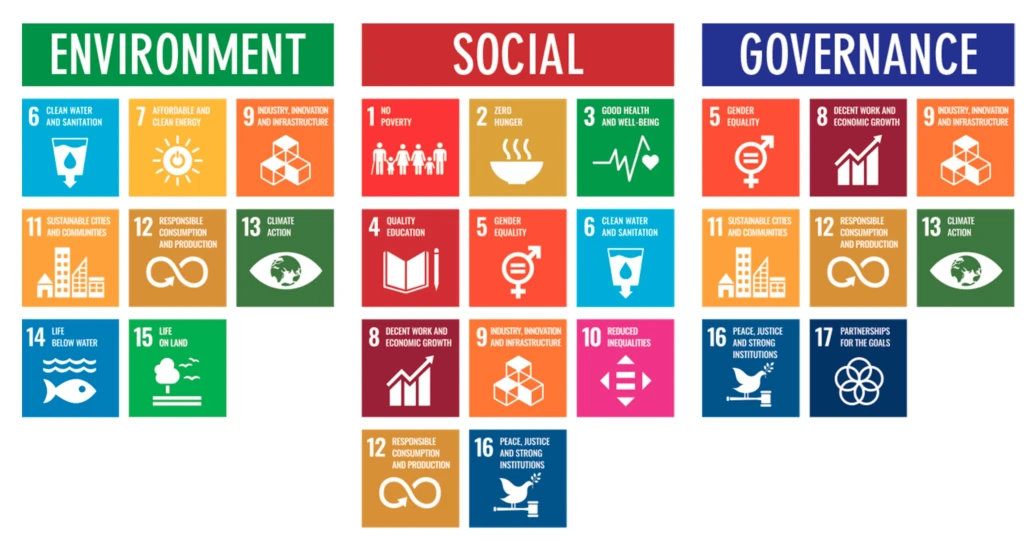
In 2015, the United Nations (UN) established a comprehensive set of Sustainable Development Goals (SDGs) aimed at guiding businesses and governments toward a more equitable and sustainable world. Although progress has been made across these goals, significant challenges persist. One surprising opportunity that stands out is land restoration, which has the potential to positively impact all 17 Sustainable Development Goals. 

According to a report by the International Resource Panel (IRP), a global scientific panel supported by the United Nations Environment Program, well-planned reforestation and related land restoration initiatives yield significant benefits that enhance both nature and communities. By engaging in land restoration initiatives like those offered by Evertreen, businesses can contribute significantly to this transformative process, fostering a sustainable future while advancing the SDGs.

Do you want to learn more about ESG? Read our article:  Sustainability at the Core: How Evertreen's Corporate Tree Planting Supports ESG Goals and Achieves Carbon Neutrality

Corporate Tree Planting: A Strategic Approach to ESG Compliance


For companies, tree planting offers a unique opportunity to align with ESG (Environmental, Social, and Governance) goals while making a tangible difference. Corporate tree planting initiatives, like those championed by Evertreen, not only offset carbon emissions but also demonstrate a company's commitment to environmental stewardship and sustainability. This form of corporate responsibility goes beyond mere compliance, fostering long-term relationships with communities, improving employee engagement, and enhancing brand reputation. Companies integrating corporate tree planting into their ESG strategy can showcase their dedication to environmental and social impact, a crucial factor for investors and consumers alike.

Goal #1: No Poverty

With 3 billion people living on less than $2.50 per day and heavily reliant on productive land for their livelihoods, reforestation stands out as a crucial solution for improving human lives. Initiatives by Evertreen provide both short- and long-term employment opportunities, enhance the land's capacity to yield food and building materials, and protect infrastructure from extreme weather events. 
Eradicating poverty necessitates establishing healthy, well-managed forests and watersheds. Many of Evertreen’s projects incorporate educational and sustainable agroforestry components, ensuring that tree planting enhances the environment while positively transforming local communities. Through these initiatives, Evertreen plays a vital role in building a sustainable future that uplifts vulnerable populations.

Goal #2: Zero Hunger

Currently, 36% of cropland, forests, and pasture systems face declining productivity, impacting over 2.5 billion people who rely on agriculture. This decline is a major driver of global hunger and food insecurity. Evertreen recognizes that restoring degraded forests and promoting sustainable agriculture through agroforestry can significantly address these challenges. 

By improving economic well-being and protecting the livelihoods of smallholder farmers, planting trees becomes essential in alleviating hunger. Sustainable agroforestry trees not only enhance land productivity but also safeguard new plantings and native forests from over-harvesting, contributing to food security for vulnerable communities.

 
Goal #3: Good Health and Well-Being

Reforestation is critical for improving human health by ensuring a sustainable supply of food and clean water. It modulates temperatures, absorbs rainwater during storms, and acts as a buffer against severe weather, all contributing to a safer environment. Furthermore, forests are vital for traditional remedies and key ingredients in 25% of Western medicines. Engaging in tree planting initiatives through Evertreen allows businesses to enhance community well-being and promote public health. 

 
Goal #4: Quality Education

Evertreen's partners prioritize education in reforestation communities, focusing on essential topics such as sustainable agroforestry and effective land use practices. Planting trees leads to increased household incomes, allowing parents more time and resources to invest in their children's education. This access fosters opportunities for a sustainable future, demonstrating how Evertreen empowers communities through educational efforts. 


Goal #5: Gender Equality

Degraded landscapes limit women's access to essential resources like water and food. Evertreen recognizes that reforestation can empower women by improving their access to nutrition and other vital resources. By collaborating with women-run cooperatives, Evertreen enhances women's roles in restoring local landscapes and increasing family incomes through agroforestry crops.


Goal #6: Clean Water and Sanitation

Access to clean water is crucial for approximately 2 billion people facing water stress due to pollution and resource degradation. Evertreen acknowledges the significant connection between land management and the water cycle. Reforestation enhances water supplies by absorbing stormwater and reducing erosion. This ensures that vital water resources are protected, benefiting both communities and ecosystems for generations to come. 

 
Goal #7: Affordable and Clean Energy

All energy sources have land use impacts, but bioenergy notably has a larger deforestation footprint compared to wind, solar, and fossil fuels. Sustainable practices in energy production and land management are crucial. Evertreen advocates for reforestation as a way to reduce pressure on primary forests while rehabilitating land degraded by mining activities. 

Goal #8: Decent Work and Economic Growth

Evertreen understands that healthy ecosystems are fundamental for thriving societies and economies. The reforestation process—from seed collection to monitoring planting sites—generates numerous jobs and economic activities. By investing in these initiatives, Evertreen promotes economic resilience and job creation in local communities. 

 
Goal #9: Industry, Innovation, and Infrastructure

The development of sustainable infrastructure heavily relies on healthy forests and well-managed land. When land is degraded, it adversely affects infrastructure longevity and effectiveness. Evertreen believes that planting trees can help support infrastructure resilience while promoting sustainable land management practices. 

  
Goal #10: Reduced Inequalities

Inequality often leads to land degradation as disadvantaged communities resort to unsustainable practices. Reforestation initiatives by Evertreen enhance incomes and improve land productivity, reducing the need for migration. This approach empowers communities and fosters environmental health, illustrating that planting trees is a win-win solution for both people and the planet. 

Goal #11: Sustainable Cities and Communities 

Planting trees is crucial for restoring essential ecosystem services in urban and suburban areas. Evertreen recognizes that improving water, soil, and air quality through reforestation can significantly reduce environmental risks. By reclaiming brownfield sites, Evertreen enhances urban resilience while relieving pressure on rural habitats.

Goal #12: Responsible Consumption and Production 

Reforestation and forest science are essential for advancing sustainable practices in resource extraction. Evertreen emphasizes that understanding the interconnectedness of resources enables informed decisions that foster innovation in sustainable management. This holistic approach ensures that we can meet the demands of a growing population while preserving ecosystem health.

Goal #13: Climate Action

Healthy trees are vital in combating climate change, absorbing significant amounts of CO2. By planting trees, we can enhance ecosystem resilience and buy time for adaptation to changing conditions. Evertreen focuses on planting native seedlings in appropriate areas, contributing to biodiversity and human well-being. 

  
Goal #14: Life Below Water

Terrestrial and oceanic ecosystems are interconnected. Land activities affect oceans through runoff and emissions.   


Goal #15: Life on Land

Reforestation and conservation are vital for a sustainable future. By prioritizing these initiatives, Evertreen contributes to poverty reduction, food security, and biodiversity preservation, ensuring healthier communities. 

Do you want to know more about the benefits of reforestation projects? Read our article: Unveiling the Benefits of Climate Action and Tree Planting Projects

Goal #16: Peace, Justice, and Strong Institutions

Land degradation can lead to resource conflicts. Restoring forests improves productivity, alleviating pressures that lead to conflict. Evertreen actively supports these initiatives to create a more peaceful and sustainable future. 

  
Goal #17: Partnerships for the Goals

Reforestation initiatives foster partnerships between organizations and governments, enabling local projects to scale up. By collaborating on tree-planting efforts, stakeholders can leverage their resources for greater impact. Evertreen champions this collaborative approach to enhance environmental initiatives and secure funding for sustainable development. 

Do you want to know more about Evertreen? Take a look at all our reforestation projects

The Ripple Effect of Land Restoration: Benefits Beyond Trees

Have you ever considered the ripple effect of land restoration? It's incredible what a bunch of trees can achieve!

While it's true that a newly planted forest may never fully replicate the original, the potential for land restoration in degraded forests is immense. By facilitating this restoration, we can enable these areas to once again shelter biodiversity and provide essential ecosystem services. These services include purifying the air, capturing and filtering rainwater, and sequestering carbon—critical actions in combating climate change.

The approach to restoration varies from project to project. The ideal solution largely depends on the land’s history, condition, potential uses, and the anticipated impacts of climate change and other stressors.

Why ESG-Driven Companies Should Consider Tree Planting with Evertreen

Tree planting is not just an environmental activity—it can become a key component of a company’s broader ESG strategy. By collaborating with Evertreen, companies can ensure that their corporate tree planting projects align with their ESG goals, from promoting biodiversity to supporting local economies. Whether the focus is on reducing inequalities through community engagement, promoting good health and well-being, or addressing climate change, Evertreen’s initiatives offer a holistic solution that contributes to multiple Sustainable Development Goals. As more investors and stakeholders place emphasis on ESG performance, tree planting provides a visible, impactful way to demonstrate corporate responsibility.

Feeling inspired by the transformative power of trees? Join Evertreen in planting trees today!


Related articles

29 Sep 2026

What Is ESG? A Simple Guide for Small Businesses

ESG stands for Environmental, Social, and Governance — a simple framework for how a company manages its impact and risks across those three areas. For a small business it is less about glossy reports and more about answering practical questions from customers, tenders, and staff: how your work affects the planet, how you treat the people around you, and how honestly you run the numbers. You do not need a sustainability department to make a start — just a clear head and a willingness to measure before you claim anything. The three pillars of ESG, in plain English Environmental. Your footprint — energy use, business travel, waste, and the CO₂ your operations produce. Social. How you treat employees, customers, suppliers, and the wider community around you. Governance. How decisions get made: ethics, data protection, fair pay, and honest record-keeping. Why the three sit together. Combined, they signal whether a business is resilient and trustworthy, not merely profitable this quarter. What it is not. ESG is not a marketing badge; treated that way it quickly becomes a liability rather than an asset. Why small businesses are suddenly being asked about ESG Even if you never publish a report, ESG questions arrive through the back door. Larger customers increasingly pass their own supply-chain rules down to smaller suppliers, public and corporate tenders now award points for environmental credentials, and employees and investors want to know what you actually stand for. Almost all of these conversations begin with a single number: your carbon footprint. You can produce a first estimate in minutes with a free CO₂ calculator, which turns a vague expectation into a figure you can put on paper and improve over time. There is a regulatory undercurrent too. Large companies in the EU now face structured sustainability reporting, and the practical effect for an SME is that their questionnaires get longer and more specific. You are rarely regulated directly; you are regulated through your customers. What you will actually be asked for Supplier questionnaires vary in length but converge on the same handful of items. Prepare these once and you can answer most of them: Your measured carbon footprint, with the reporting year and the boundary stated. Whether you have a reduction target, and what it covers. What you offset, under which standard, with evidence of retirement. Basic people policies — pay, health and safety, anti-discrimination, modern slavery statement where applicable. Governance basics — data protection, anti-bribery, who is accountable for all of the above. A single well-maintained page covering those five items answers most questionnaires and takes an afternoon rather than a consulting engagement. Practical first steps: start with the environmental The E is the most actionable pillar for a small team, so begin there. Measure your footprint, cut what you genuinely can — switch to greener suppliers, reduce travel, waste less — and then offset only the remainder rather than pretending it is already zero. Offsetting is where transparency matters most: Evertreen lets you fund real tree planting from £1.5 per tree, and for compliance-grade reporting you can request certified Verra and Gold Standard credits. The order is the point — measure, reduce, then offset — because buying credits before you have cut anything is exactly what regulators now single out. The method is in how to calculate your business carbon footprint. Don't neglect S and G — they are cheaper than you think Small businesses often assume the social and governance pillars require formal programmes. Mostly they require writing down what you already do. Fair pay practices, a clear complaints route, supplier payment terms you actually honour, a data protection policy that matches reality, and a named person accountable for decisions — that is a credible S and G position for a company of ten people. What damages a small business is not the absence of a glossy policy; it is a policy that says something the company visibly does not do. How visible tree planting supports the social side Environmental action doubles as social proof when it is visible and honest. Every tree Evertreen funds belongs to a named project whose location, photos and updates are published, so you can show customers where their impact sits instead of asking them to trust a logo — useful both for credible reporting and for engaging your own community. Some businesses turn this into branded corporate gifting, planting a tree for each client win or employee milestone. One caution worth repeating: never let planting become a substitute for reduction. Claiming to be "carbon neutral" while your emissions keep climbing is greenwashing, and it does more reputational damage than staying quiet. Note too that from 27 September 2026 the EU bans marketing a product to consumers as carbon neutral on the basis of offsetting. Keep the story modest, specific, and backed by numbers you can defend — see are carbon offsets greenwashing? Frequently asked questions Does a small business really need to worry about ESG? If you sell to larger companies, bid for tenders, or want to attract good staff and investors, yes — you will be asked. Starting small with a measured carbon footprint is usually enough to stay in the conversation. Where should a small business start with ESG? Start with the environmental pillar because it is the most measurable. Calculate your CO₂ footprint, reduce what you can, and offset the rest transparently before worrying about the social and governance pillars. Is planting trees enough to make my business sustainable? No. Tree planting offsets emissions you cannot yet avoid, but it should follow real reduction. Used honestly alongside cuts to energy and travel, it is a credible part of the plan — not a replacement for it. Do we need an ESG report? Rarely at SME scale. A one-page summary of your footprint, targets, offsetting evidence and key policies covers most of what customers actually ask for. Is ESG legally required for small companies? Usually not directly. The requirements land on large companies, and reach smaller suppliers through procurement questionnaires and contract terms. How much does getting started cost? The measurement can be free with a calculator and a few hours of time. The meaningful spend is in the reductions themselves and, optionally, in offsetting the residual. What is the most common mistake? Claiming more than you can evidence. A modest, documented position is worth far more in a tender than an ambitious one that falls apart under a follow-up question. { "@context": "https://schema.org", "@type": "FAQPage", "mainEntity": [ {"@type": "Question", "name": "Does a small business really need to worry about ESG?", "acceptedAnswer": {"@type": "Answer", "text": "If you sell to larger companies, bid for tenders or want to attract good staff and investors, yes. Starting with a measured carbon footprint is usually enough to stay in the conversation."}}, {"@type": "Question", "name": "Where should a small business start with ESG?", "acceptedAnswer": {"@type": "Answer", "text": "Start with the environmental pillar because it is the most measurable. Calculate your CO2 footprint, reduce what you can, and offset the rest transparently."}}, {"@type": "Question", "name": "Is planting trees enough to make my business sustainable?", "acceptedAnswer": {"@type": "Answer", "text": "No. Tree planting offsets emissions you cannot yet avoid but should follow real reduction. Used honestly alongside cuts to energy and travel it is a credible part of the plan."}}, {"@type": "Question", "name": "Do small businesses need an ESG report?", "acceptedAnswer": {"@type": "Answer", "text": "Rarely at SME scale. A one-page summary of your footprint, targets, offsetting evidence and key policies covers most of what customers ask for."}}, {"@type": "Question", "name": "Is ESG legally required for small companies?", "acceptedAnswer": {"@type": "Answer", "text": "Usually not directly. Requirements land on large companies and reach smaller suppliers through procurement questionnaires and contract terms."}}, {"@type": "Question", "name": "How much does starting with ESG cost?", "acceptedAnswer": {"@type": "Answer", "text": "Measurement can be free with a calculator and a few hours of time. The meaningful spend is in the reductions themselves and optionally in offsetting the residual."}}, {"@type": "Question", "name": "What is the most common ESG mistake for small businesses?", "acceptedAnswer": {"@type": "Answer", "text": "Claiming more than you can evidence. A modest documented position is worth far more in a tender than an ambitious one that collapses under a follow-up question."}} ] }

arrow right
14 Sep 2026

Eco-Friendly Employee Gifts That Actually Mean Something

The best eco-friendly employee gift is one that creates zero waste, feels genuinely personal, and still supports the sustainability goals your company already reports on – and a real, named tree does all three at once. Where branded mugs, tote bags, and gift cards are quickly forgotten or thrown away, a planted tree gives each colleague something lasting with their name attached, while turning a routine thank-you into a small but measurable environmental contribution. For an internal audience, that combination of low cost, no logistics, and real meaning is difficult for any physical gift to match – and it keeps working long after the moment has passed. Why a planted tree makes a better staff gift No clutter. There is nothing to wrap, ship home, or eventually throw out – the gift lives in the ground, not on a desk. Personal by default. Each employee receives a certificate in their own name, so a company-wide gesture still feels individual rather than a mass send. Scales to any headcount. Gifting five people or five thousand takes the same effort, with a cost from £1.5 per tree. On-brand for ESG. If sustainability is part of how you present the company, the gift reinforces that message instead of contradicting it. Measurable. Every tree belongs to a real, located project and has an estimated CO₂ contribution you can fold into your reporting. Inclusive. A tree carries no size, taste, or dietary constraints, so the same gift genuinely suits everyone on the team. How it compares with the usual options Branded merchandise. Cheap per unit, but a large share is discarded, and staff can read logo-covered items as advertising rather than thanks. Gift cards. Genuinely useful and genuinely impersonal — and a meaningful proportion go unredeemed. Hampers and alcohol. Well received by some, awkward for others, and a compliance headache in regulated industries. Charity donation in their name. Closest in spirit, but usually invisible — there is nothing to look at afterwards. A tree in a named project, with its location, photos and updates, is the version you can actually see. The honest caveat: for some people, nothing replaces a physical object. For a small group of key recipients, pairing a certificate with something tangible covers both instincts. Moments worth marking with a tree A tree suits the moments that deserve more than a generic reward. Use it as a welcome gift during onboarding, so a new hire's first day already says something about the company's values; to mark work anniversaries, promotions, and project milestones; as an end-of-year holiday thank-you to the whole team; or as a wellbeing and all-hands recognition reward. Because you can gift a single tree or thousands at once, the same gesture works for one new starter on their first morning and for an entire company at the close of the year – without redesigning the process, managing stock, or watching the budget balloon each time headcount grows. Getting the details right Give more than one tree. Five to ten per person reads as a real gesture; a single symbolic tree per head can feel like a rounding error. Name every certificate. The difference between "we planted 500 trees" and 500 named certificates is the difference between a CSR line and a gift. Send it from a person, not the company. A line from a manager beats a templated all-staff email every time. Avoid the December pile-up if you want it noticed — a mid-year thank-you lands far better. Show the forest at the all-hands. A map of the company forest growing year on year does more for engagement than the original email did. How it works across a whole team Behind each gift is a real tree in a named project – with the project's location, photos and updates, not a vague pledge – and every employee receives their own personalised gift certificate, all collected into a single company forest you can show off at your next all-hands or on a careers page. For larger programmes, our API and Shopify integration let you trigger a tree automatically the moment someone is onboarded or reaches an anniversary, so the admin work stays close to zero as you scale, and our corporate gifting case studies show how other teams have run exactly this. Because the projects and their locations are documented, the impact can feed ESG and engagement reporting honestly – no rounded-up numbers or offset math, just the trees that were actually planted in your team's name. One framing note for the reporting side: gifted trees are a contribution, not a carbon claim. Keep them separate from any neutrality statement — the distinction is explained in tree planting vs carbon offsets. The wider corporate approach is in corporate tree gifts for clients and employees. Frequently asked questions How much does it cost to gift a tree to employees? Trees start from £1.5 each, and the price per tree stays the same whether you gift a handful or several thousand. There are no separate per-recipient fees on top, so a 200-person team simply costs 200 trees and the total scales predictably with your headcount. What does each employee actually receive? Each person gets a personalised certificate in their name, linked to the project where their tree is planted, with its location, photos and updates, rather than a generic voucher. They can follow that certificate to see the project's area on the map. Can we gift trees to a large team at once? Yes. Bulk gifting is built for any headcount, and you can automate it through the API or Shopify so trees are sent at onboarding or on each work anniversary, with every tree gathered into one company forest. How many trees should we give per employee? More than one. Five to ten per person reads as a genuine gesture, and the cost difference at that scale is small compared with most physical gifts. Do employees actually like receiving trees? Response improves sharply when the certificate is named, the message is personal and the location is included. A generic company-wide announcement gets a much cooler reception. Can we use this for remote and international teams? Yes — that is one of its main advantages. There is no shipping, customs or address problem, so everyone receives the same gift on the same day. Can gifted trees count towards our carbon reporting? Treat them as a contribution rather than an offset claim. For audited tonnes, use certified credits alongside the gifting programme. { "@context": "https://schema.org", "@type": "FAQPage", "mainEntity": [ {"@type": "Question", "name": "How much does it cost to gift a tree to employees?", "acceptedAnswer": {"@type": "Answer", "text": "Trees start from 1.5 pounds each and the price per tree stays the same whether you gift a handful or several thousand, with no separate per-recipient fees."}}, {"@type": "Question", "name": "What does each employee actually receive?", "acceptedAnswer": {"@type": "Answer", "text": "A personalised certificate in their name linked to the project where their tree is planted, with its location, photos and updates, rather than a generic voucher."}}, {"@type": "Question", "name": "Can we gift trees to a large team at once?", "acceptedAnswer": {"@type": "Answer", "text": "Yes. Bulk gifting works at any headcount and can be automated through the API or Shopify at onboarding or on work anniversaries, with every tree gathered into one company forest."}}, {"@type": "Question", "name": "How many trees should we give per employee?", "acceptedAnswer": {"@type": "Answer", "text": "More than one. Five to ten per person reads as a genuine gesture and the cost difference is small compared with most physical gifts."}}, {"@type": "Question", "name": "Do employees actually like receiving tree gifts?", "acceptedAnswer": {"@type": "Answer", "text": "Response improves sharply when the certificate is named, the message is personal and the location is included. Generic company-wide announcements get a cooler reception."}}, {"@type": "Question", "name": "Do tree gifts work for remote and international teams?", "acceptedAnswer": {"@type": "Answer", "text": "Yes, and it is one of the main advantages. There is no shipping, customs or address problem, so everyone receives the same gift on the same day."}}, {"@type": "Question", "name": "Can gifted trees count towards our carbon reporting?", "acceptedAnswer": {"@type": "Answer", "text": "Treat them as a contribution rather than an offset claim. For audited tonnes, use certified credits alongside the gifting programme."}} ] }

arrow right
5 Sep 2026

What Is the Carbon Footprint of a Website?

A typical web page emits roughly 0.5–5 g CO₂ per view, so a website's carbon footprint is simply that per-view figure multiplied by your traffic — a site serving a million page views a year lands at ≈ 0.5–5 tonnes of CO₂. The exact number swings with page weight, how and where the site is hosted, and the devices your visitors use, so treat any single result as an order-of-magnitude estimate rather than a precise measurement. Where a website's emissions come from Data centres. The servers that store and deliver your pages draw electricity around the clock, plus extra energy to keep the hardware cool. Network transfer. Every image, script, font and video crosses routers, cables and mobile networks that all burn power in transit. User devices. Phones, tablets and laptops spend their own energy downloading, rendering and displaying each page you send them. Traffic volume. A tiny per-view figure multiplied by millions of visits is what quietly turns grams into tonnes over a year. How to estimate your site's footprint To size your own footprint, multiply a realistic per-view figure by your annual page views — but first work out where your pages sit in that 0.5–5 g band. The biggest driver is page weight: heavy hero images, autoplaying video and uncached assets can push a single page well past 5 g, while a lean, well-cached page stays under 0.5 g. Hosting matters almost as much, since a server on a renewable-powered grid emits far less than a "dirty-grid" data centre running on fossil fuels. Rather than guess, drop your numbers into a free tool such as Evertreen's CO₂ calculator to get a defensible annual estimate before you change anything. A worked example Take a mid-sized business site with 500,000 page views a year: At a lean 0.5 g per view, that is about 0.25 tonnes a year — roughly a short-haul return flight. At a heavy 4 g per view, it is about 2 tonnes — roughly a long-haul return flight per year, every year. The instructive part is the ratio: the same traffic produces an eightfold difference purely from how the pages were built. Very few carbon reduction levers in any business are that cheap to pull. What actually drives page weight In practice the culprits are consistent, and they are rarely the things developers worry about: Video. An autoplaying background video can outweigh the entire rest of the page by an order of magnitude. It is almost always the single biggest win. Uncompressed images. Serving a 3000px hero image to a phone is the most common waste on the web. Modern formats and correct sizing usually cut image weight by 60–80%. Third-party scripts. Tag managers, chat widgets, A/B tools and analytics stack up quietly, and each one is downloaded and executed on every device. Web fonts. Four weights of two families is a surprisingly heavy default. Two weights is usually plenty. No caching. Returning visitors re-downloading assets they already have is pure waste. A note on "green hosting" claims Most green-hosting claims rest on renewable energy certificates rather than a physically different power supply — the provider buys certificates matching its consumption. That is a legitimate market-based accounting method, and it is genuinely better than nothing, but it is worth understanding for what it is. Stronger signals are on-site generation, long-term power purchase agreements and published carbon intensity per region. The mechanism is explained in RECs vs carbon offsets. Either way, reducing what you send beats accounting for what you sent. How to cut a website's carbon footprint Once you know the rough figure, the fastest wins come from shrinking what you send. Compress and lazy-load images, strip out unused scripts and fonts, minify your code and cache aggressively so returning visitors re-download as little as possible. Choosing a host that runs on renewable energy cuts the data-centre share at a stroke, and a good CDN shortens the distance your data has to travel. In practice these steps can halve a page's footprint while also making it load faster, which tends to lift conversions and search rankings at the same time — a rare case where the greener option is also the more profitable one. Offset the remainder with traceable trees You will rarely reach zero on efficiency alone, so the honest final step is to offset the emissions you cannot yet design out. Evertreen lets you fund real reforestation with traceable trees from £1.5 each, and you can plant trees as a one-off or on a recurring basis, with each project's location shown on a map so you can show visitors where their impact lands. For businesses, our API and Shopify integration build offsetting straight into a site or checkout, so you can neutralise emissions automatically per order or per visit rather than by hand. When you need audit-ready proof for ESG or customer reporting, you can also request certified Verra & Gold Standard carbon credits on top. Keep the claim proportionate: a website's footprint is usually a small line in a company's total, so treat it as a well-executed detail rather than the centrepiece of your climate story. The full inventory is in how to calculate your business carbon footprint. Frequently asked questions How much CO₂ does a website produce? A single page view is usually 0.5–5 g CO₂, so a site serving a million page views a year sits at roughly 0.5–5 tonnes of CO₂. Page weight and the cleanliness of your hosting decide where in that range you land. How can I reduce my website's carbon footprint? Shrink page weight, compress and lazy-load images, cut unused code, cache assets and move to a host powered by renewable energy. These steps lower emissions and load times together, and you can offset whatever remains. Can planting trees offset a website's emissions? Yes. After you have estimated your annual footprint and reduced what you can, funding traceable trees or certified carbon credits lets you balance the CO₂ you cannot yet remove. What is the single biggest change I can make? Remove or replace autoplaying video, then right-size images. Together they account for most of the weight on a typical marketing site. Does dark mode reduce emissions? Marginally, and only on OLED screens. It is a nice touch, not a strategy — page weight matters far more. Is a static site greener than a dynamic one? Usually, because it caches better and does less work per request. The difference is smaller than the difference between a light page and a heavy one. Should we advertise our site as carbon neutral? Be careful. Report what you measured and what you funded as separate numbers, and note that EU rules restrict offset-based neutrality claims made to consumers from September 2026. { "@context": "https://schema.org", "@type": "FAQPage", "mainEntity": [ {"@type": "Question", "name": "How much CO2 does a website produce?", "acceptedAnswer": {"@type": "Answer", "text": "A single page view is usually 0.5 to 5 g CO2, so a site serving a million page views a year sits at roughly 0.5 to 5 tonnes. Page weight and hosting decide where in that range you land."}}, {"@type": "Question", "name": "How can I reduce my website's carbon footprint?", "acceptedAnswer": {"@type": "Answer", "text": "Shrink page weight, compress and lazy-load images, cut unused code, cache assets and move to a host powered by renewable energy. These steps lower emissions and load times together."}}, {"@type": "Question", "name": "Can planting trees offset a website's emissions?", "acceptedAnswer": {"@type": "Answer", "text": "Yes. After estimating your annual footprint and reducing what you can, funding traceable trees or certified carbon credits balances the CO2 you cannot yet remove."}}, {"@type": "Question", "name": "What is the single biggest change to reduce website emissions?", "acceptedAnswer": {"@type": "Answer", "text": "Remove or replace autoplaying video, then right-size images. Together they account for most of the weight on a typical marketing site."}}, {"@type": "Question", "name": "Does dark mode reduce a website's emissions?", "acceptedAnswer": {"@type": "Answer", "text": "Marginally, and only on OLED screens. It is a nice touch rather than a strategy, since page weight matters far more."}}, {"@type": "Question", "name": "Is a static website greener than a dynamic one?", "acceptedAnswer": {"@type": "Answer", "text": "Usually, because it caches better and does less work per request, though the difference is smaller than that between a light page and a heavy one."}}, {"@type": "Question", "name": "Should we advertise our website as carbon neutral?", "acceptedAnswer": {"@type": "Answer", "text": "Report what you measured and what you funded as separate numbers. EU rules restrict offset-based neutrality claims made to consumers from September 2026."}} ] }

arrow right
products View cart

Plant & offset from £ 1

Let’s find the best tree planting or Verra CO₂ offset solution for your needs.

I agree to be contacted by email and SMS from Evertreen based on my provided details